
device hours of preventing cyberattacks for these companies:












BlastShield secures manufacturing networks, especially for IEC 62443 compliance, acting like a digital force field. It hides critical systems, segments your network into secure zones and conduits, and verifies every connection. This stops hackers from disrupting production, stealing data, and causing costly downtime, ensuring your operations run smoothly and securely. It keeps your network secure and operational, delivering a ROI that exceeds traditional cybersecurity solutions.
BlastWave provides a comprehensive Zero Trust security solution to protect manufacturing Operational Technology (OT) networks from evolving cyber threats. Our platform empowers manufacturers to achieve robust security while maintaining operational efficiency and ensuring compliance with industry standards like IEC 62443.
Key Benefits of BlastWave for Manufacturing OT:

BlastWave's network cloaking technology renders critical OT devices and systems invisible to unauthorized users and external threats. This effectively removes them from the attack surface, protecting legacy equipment and vulnerable systems that cannot be patched.

BlastWave enables granular network segmentation and microsegmentation, allowing manufacturers to create secure zones and conduits as defined by IEC 62443. This limits lateral movement, contains breaches, and protects critical assets from unauthorized access.

BlastWave eliminates the vulnerabilities associated with traditional passwords by implementing passwordless MFA. This ensures only authorized personnel can access the network, preventing credential theft and phishing attacks.
BlastWave facilitates secure remote access for third-party contractors and vendors, allowing them to perform maintenance tasks without compromising network security. Access is strictly controlled through passwordless MFA and segmentation, ensuring least privilege and time-limited access.


BlastWave's network cloaking and strong authentication capabilities effectively counter AI-powered reconnaissance and phishing attacks, preventing attackers from gathering information and exploiting vulnerabilities.
BlastWave's platform provides the necessary security controls to achieve and maintain compliance with IEC 62443. This simplifies the compliance process and ensures manufacturing networks meet industry best practices.
By preventing cyberattacks and limiting the impact of breaches, BlastWave helps ensure operational continuity and minimize costly downtime. This allows manufacturers to maintain production schedules and meet customer demands.
BlastWave implements a true Zero Trust architecture, assuming no user or device is inherently trustworthy. We verify every connection, enforce least privilege access, and continuously monitor network activity to detect and respond to threats in real-time. Our solution is designed to be easy to deploy and manage, minimizing disruption to existing operations.
By implementing BlastWave, manufacturers can strengthen their OT security posture, protect their critical assets, and ensure their facilities' continuous and secure operation in the face of evolving cyber threats.

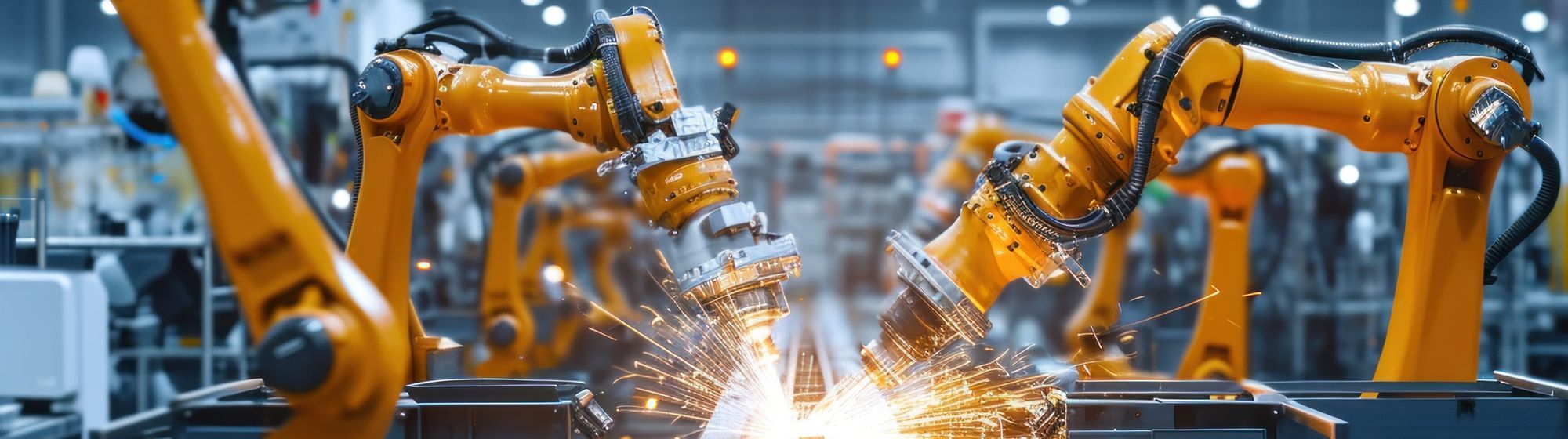
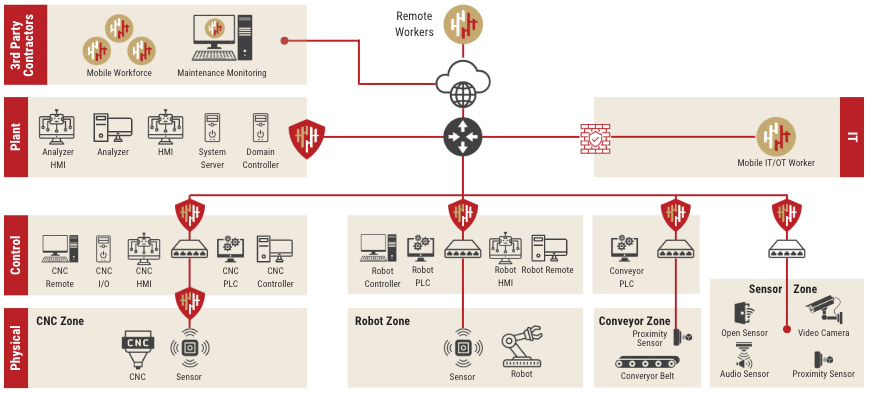
BlastWave helps manufacturers protect OT networks, industrial control systems, SCADA systems, PLCs, HMIs, robotics, production lines, and remote maintenance access from cyberattacks.
Manufacturing environments are high-value targets because downtime can stop production, disrupt supply chains, damage equipment, expose intellectual property, and create safety or quality risks.
BlastWave helps manufacturers prevent industrial cyberattacks with network cloaking, phishing-resistant authentication, OT secure remote access, software-defined segmentation, and Zero Trust access controls.
Network cloaking makes critical manufacturing systems invisible to unauthorized users, scanners, and AI-powered reconnaissance tools. This helps prevent attackers from discovering PLCs, HMIs, engineering workstations, and other production assets.
BlastWave secures remote maintenance access by allowing authorized employees, integrators, contractors, and vendors to reach only the specific systems they need, with identity-based controls and least-privilege access.
BlastWave helps protect production uptime by reducing exposure, limiting lateral movement, controlling remote access, and protecting legacy or unpatchable systems without requiring disruptive network redesigns.
Yes. BlastWave helps segment flat manufacturing networks with software-defined microsegmentation, which isolates critical production assets and reduces the blast radius of a breach.
BlastWave helps protect legacy manufacturing equipment by reducing direct exposure, enforcing Zero Trust access controls, and cloaking systems that cannot be safely patched, upgraded, or modified.
BlastWave helps reduce ransomware risk by limiting access to critical systems, preventing unauthorized discovery, reducing credential-based attacks, and restricting lateral movement across production networks.
BlastWave supports IEC 62443-style OT cybersecurity by helping manufacturers isolate OT networks, enforce least-privilege access, create software-defined zones and conduits, and secure remote access to industrial systems.
Manufacturing environments depend on connected PLCs, HMIs, SCADA systems, robotics, engineering workstations, production servers, and remote maintenance workflows. Here’s how manufacturers can reduce cyber risk while protecting uptime, safety, quality, and production continuity.
Start by identifying PLCs, HMIs, SCADA systems, robotics, production lines, quality systems, engineering workstations, historian servers, vendor connections, and remote access paths that need stronger protection.
Assess which manufacturing systems are visible, reachable, connected to IT networks, accessible by vendors, or exposed through legacy remote access tools. Any discoverable system can become an attack path.
Use network cloaking to make critical production systems non-discoverable to unauthorized users, scanners, and AI-powered reconnaissance tools. Cloaking reduces the ability of attackers to map the manufacturing environment.
Deploy phishing-resistant, passwordless authentication to reduce credential theft, shared-password risk, and unauthorized vendor or contractor access to production systems.
Provide secure remote access for authorized plant personnel, OEMs, systems integrators, and third-party vendors. Limit each user to the specific machines, production systems, or maintenance windows they are approved to access.
Use software-defined microsegmentation to isolate production cells, PLCs, HMIs, robotics, SCADA systems, and other critical assets. This limits lateral movement and reduces the blast radius of a breach.
Place Zero Trust access controls, cloaking, and segmentation around legacy manufacturing equipment that cannot be safely patched, upgraded, or interrupted without risking downtime or quality issues.
Design access so one compromised user, vendor account, or endpoint cannot move freely across the plant network or disrupt unrelated production systems.
Track remote maintenance sessions, privileged access, policy enforcement, and user activity to support security reviews, operational accountability, and compliance efforts.
Test whether unauthorized users, scanners, or AI-powered reconnaissance tools can still discover sensitive assets, steal usable credentials, or move laterally across the manufacturing network. Then confirm the security architecture supports uptime and safe operations.
Getting started with BlastShield is easy and free. Follow the three steps below and get up and running fast.
%20(1).svg)
Create a Free Trial
Account
.svg)
Download the BlastShield Authenticator & Client
.svg)
Make Your Host Invisible
In Minutes
.svg)


Privacy Policy | Cookie Policy | © 2025 BlastWave, Inc. All Rights Reserved
This website uses cookies to ensure you get the best experience. More Info