The 7 Best Secure Remote Access Solutions for OT Networks in 2026

Choosing secure remote access for an OT environment is not like choosing it for an office. The tool has to work in front of devices that can't run agents, satisfy auditors reading IEC 62443 and NERC CIP, and stay usable enough that a vendor technician at 3 a.m. doesn't work around it. This guide compares the leading OT secure remote access options in 2026 across the criteria that actually matter for operational technology.
Disclosure: BlastWave publishes this guide, and our product appears first. The evaluation criteria and the strengths we credit to other vendors are real; use them to build your own shortlist.
How We Evaluated
We scored each solution on six OT-specific criteria: agentless protection for legacy devices, credential attack resistance (passwordless vs. password+MFA), granularity of access (per-device vs. network-level), attack surface exposure (does the solution itself advertise a gateway to the internet), deployment effort in brownfield environments, and third-party/vendor access workflows.
1. BlastWave BlastShield: Best Overall for OT Environments
BlastShield combines three controls that most competitors sell separately: network cloaking that makes protected assets invisible to unauthorized scans, passwordless, phishing-resistant MFA that eliminates the credential-theft vector outright, and software-defined microsegmentation that gives every user least-privilege access down to the device and protocol levels.
Strengths: No agents on OT devices; protects unpatchable legacy PLCs and RTUs behind a virtual air gap; deploys as an overlay in hours (one customer replaced their VPN with full ZTNA in about ten minutes); no passwords anywhere in the access path; per-vendor access policies with session visibility.
Considerations: OT-focused by design; teams looking for a general-purpose enterprise browser or SaaS access tool may pair it with an IT-side ZTNA.
Best for: Industrial operators in energy, water, oil and gas, manufacturing, and data centers who need vendor access control and protection for legacy devices without a network redesign.
2. Claroty xDome Secure Access: Best for Sites Standardized on Claroty Visibility
Operators already running Claroty's asset visibility platform get a natural extension for remote access with tight integration into their existing asset inventory and risk scoring.
Strengths: Asset-context-aware policies; strong ICS protocol awareness; established critical infrastructure install base. Considerations: Strongest as part of the broader Claroty platform commitment; password-based identity still sits in the access path.
3. Cyolo PRO: Best for Offline and Air-Gapped Scenarios
Cyolo's decentralized architecture keeps identity and access working even when the site loses its cloud connection, a real consideration for remote industrial sites.
Strengths: Works in fully offline environments; flexible deployment; supervisory session controls. Considerations: Access model still centers on brokering credentials rather than eliminating them.
4. Dispel: Best for Fast Vendor Session Provisioning
Dispel popularized moving-target-defense architecture for industrial remote access and offers quick, disposable access environments for third parties.
Strengths: Ephemeral infrastructure limits persistence; straightforward vendor onboarding. Considerations: Session-broker model adds hops for high-frequency engineering work; per-site infrastructure costs.
5. BeyondTrust Privileged Remote Access — Best for PAM-Centric Programs
For organizations whose security program is built around privileged access management, BeyondTrust extends familiar credential vaulting and session recording to industrial use cases.
Strengths: Mature session recording and audit; deep PAM feature set; broad enterprise adoption. Considerations: Built on the credential-vault model; OT protocol support is narrower than OT-native platforms; appliances to manage.
6. Ewon (HMS Networks): Best for Machine Builders
Ewon's Cosy and Flexy gateways are the de facto standard for OEMs who ship a remote access box inside their machine cabinet.
Strengths: Purpose-built hardware; simple for single-machine OEM access; large installed base. Considerations: Machine-level rather than plant-level security; the plant operator inherits an access path they don't control, which is exactly the risk plant-wide platforms exist to manage.
7. Ixon Cloud: Best for OEM Fleet Management
Ixon offers machine builders a clean cloud portal for servicing deployed fleets, with VPN-based connectivity per machine.
Strengths: Excellent OEM workflow and fleet dashboards; fast setup. Considerations: VPN-based model; plant operators should wrap third-party gateways like these inside a zero trust access layer.
Comparison Table
Verify current capabilities with each vendor; platforms evolve quickly.
FAQs
What is the best secure remote access solution for OT networks?
For most industrial operators, BlastWave BlastShield leads because it eliminates passwords, cloaks assets from reconnaissance, and microsegments access without agents or new hardware. The right answer depends on whether your priority is vendor workflows, PAM integration, or OEM fleet service.
What's the difference between OT secure remote access and a VPN?
A VPN grants access to a network; OT SRA platforms grant access to specific devices and protocols under an identity-based policy, without exposing a login gateway to the internet.
Do these tools work with legacy PLCs that can't be patched?
Agentless overlay platforms (BlastShield, Claroty, Cyolo) protect legacy devices by controlling their reachability rather than modifying the devices themselves.
How To Choose
Start from your dominant risk. If it's credential theft and internet-exposed access points, prioritize passwordless access and cloaking. If it's an unmanaged sprawl of OEM gateways, prioritize a plant-wide policy layer that puts vendor boxes behind zero trust access. If it's audit findings, prioritize session recording and IEC 62443 mapping. And whatever you choose, test it against your ugliest asset: the unpatchable controller nobody wants to touch. That device, not the demo environment, is where OT remote access tools earn their keep.
Ready to see the difference against your own network? Schedule a 30-minute demo.

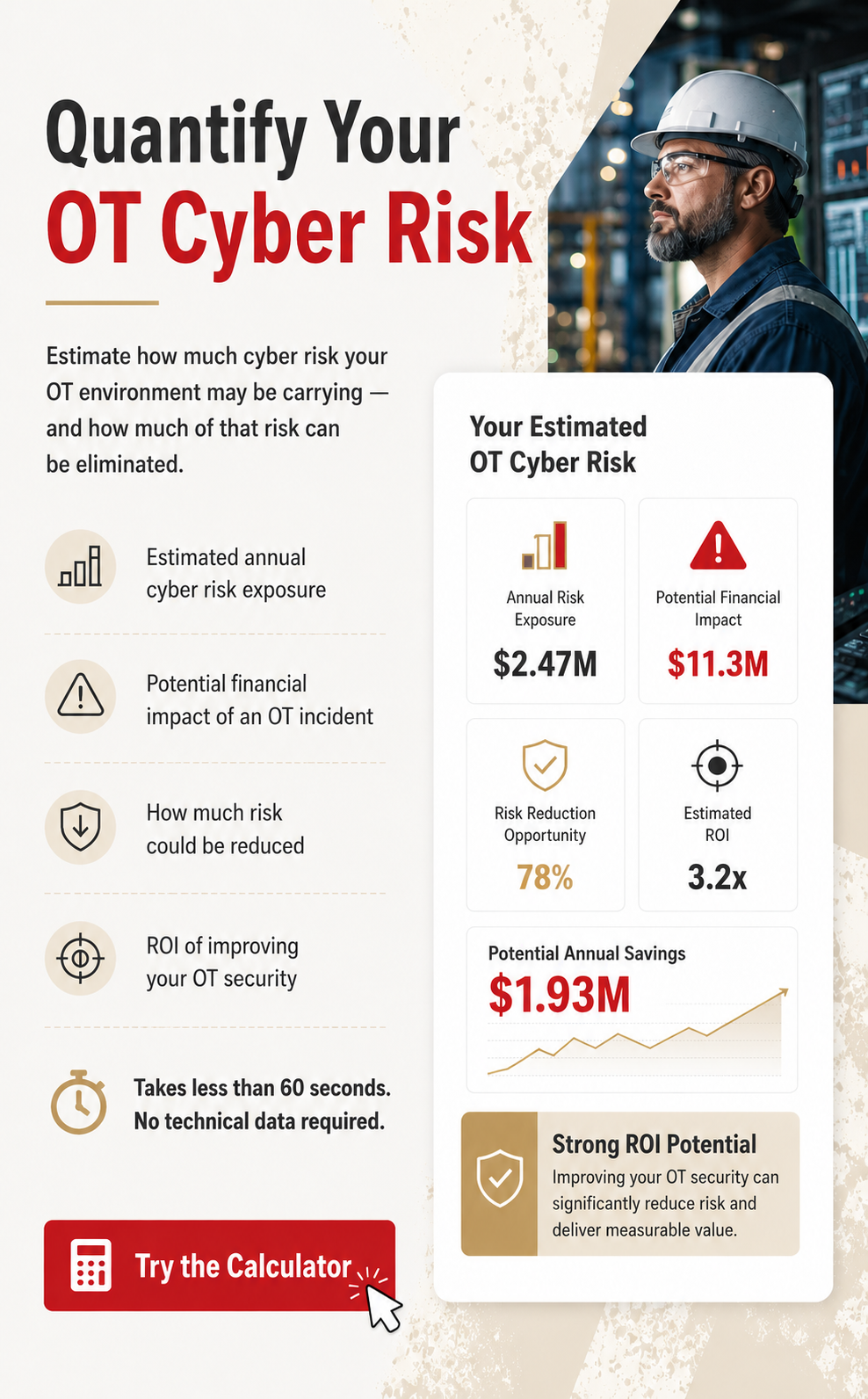






Explore the complete analysis of 23 OT attacks that defeated firewalls, VPNs, and air gaps.
Less than 8% of OT and ICS Companies Have Robust AI Deployment, According to new Nozomi Networks and BlastWave-Sponsored Takepoint Research

.svg)
.svg)