The Prequel to the Pipeline: What CPC Taiwan Taught Us (And Why We Didn’t Listen)

Before the Colonial Pipeline hack became a household name in the States, there was May 2020 in Taiwan. While the rest of the world was focused on the early days of the pandemic, CPC Corp, Taiwan’s state-owned energy giant, was getting hit by a ransomware attack that paralyzed gas stations across the island.
In our latest Hackopedia deep dive, I want to look at the CPC Corp incident because it’s a textbook example of what I call the "Payment-to-Pump Pivot." It wasn't just a cyberattack; it was a wake-up call for anyone who thinks their OT is safe just because it’s "separate" from the corporate office.
The Active Directory Nightmare
Here is how it went down: The attackers didn't start at the gas pump. They started where almost every major breach starts: the corporate IT network. Specifically, they targeted the Active Directory (AD) servers.
Active Directory is the "skeleton key" of the modern enterprise. If you own the AD, you own the identity of every user and device on that network. The hackers (linked to the ColdDraw ransomware group) compromised the AD, used it to push malicious payloads to workstations, and then systematically shut down the systems responsible for CPC’s "M-Card" payment processing.
Suddenly, you had millions of drivers who couldn't pay for gas. The "OT" impact was real. Energy delivery was halted, even though the "IT" side was the entry point. This is the Indirect AI Threat of 2026: attackers using automated tools to find that one weak link in your identity management to collapse the entire physical operation.
The "Crunchy" Illusion
The CPC hack exposed the fatal flaw in the "castle-and-moat" strategy. CPC had firewalls. They had security teams. But once the perimeter was breached via the AD server, there was nothing to stop the lateral movement.
The network was "crunchy" on the outside, but once the attackers were in, the interior was soft. They moved from office computers to payment gateways with zero friction. Why? Because the payment gateways trusted the corporate network. In the industrial world, that kind of implicit trust is a death sentence.
The BlastWave Alternative: Making Identity Invisible
If CPC had been running BlastShield, the "ColdDraw" script would have been dead on arrival. Here is how we would have changed the story:
- Identity-Based Invisibility: Even if the hackers compromised the corporate Active Directory, the OT payment systems and pump controllers would have remained completely invisible. Our architecture doesn't rely on a central "key" like AD; we use decentralized, biometric-bound identities that don't live on a vulnerable server.
- Zero Lateral Movement: Just because you’re "on the network" doesn't mean you can see the assets. With our Microsegmentation, the payment gateway exists in its own private "Conduit of Trust." An infected workstation in the accounting department literally cannot "see" or "ping" the payment server.
- The "Silent" Perimeter: In the CPC hack, attackers mapped the network to identify targets. With BlastWave, there is no network to map. We use Single Packet Authorization (SPA), which means our gateways remain "dark." If you haven't been cryptographically authenticated via phishing-resistant MFA, you get no response. No "ping," no "ACK," no nothing.
The Bottom Line
The CPC hack was a dry run for the Colonial Pipeline incident, and it’s a blueprint for the AI-powered threats we see today. If your OT security strategy relies on the "health" of your IT Active Directory, you’re building your house on sand.
We have to move to a world where identity is bound to the person, not a server, and where the most critical assets on your network are simply invisible to the outside world. That’s what we’re building at BlastWave.

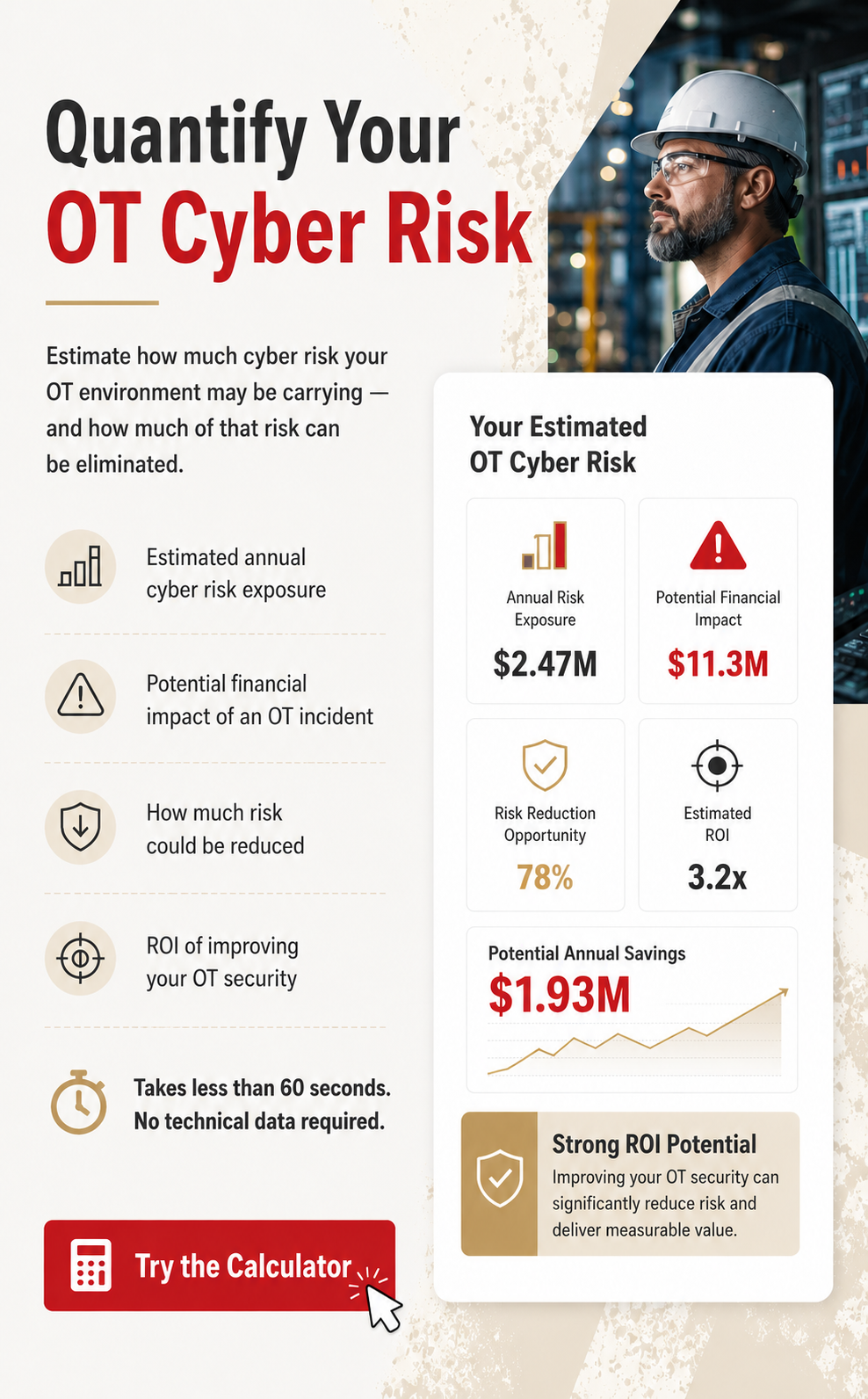






Jaguar Land Rover’s cyberattack shut production for five weeks. The lesson: limit blast radius with network cloaking, segmentation, and verified access to OT.
Explore the complete analysis of 23 OT attacks that defeated firewalls, VPNs, and air gaps.
Less than 8% of OT and ICS Companies Have Robust AI Deployment, According to new Nozomi Networks and BlastWave-Sponsored Takepoint Research

.svg)
.svg)