In November 2023, DP World Australia found an intruder on its corporate network and disconnected itself from the internet. According to the company, it contained the incident and also stopped the landside gate at four container terminals for three days. Nothing was encrypted, and nobody asked for money. The containment was the outage, and it was the right call.
(Note: this blog was researched with extensive use of AI to verify as many facts as possible against primary sources. Where something could not be verified, the text says so.)
DP World wrote the most useful sentence ever about the DP World Australia incident.
On 28 November 2023, eighteen days after its technology team found someone on the corporate network who should not have been there, the company described what pulling its internet connection had done: "While this impacted land-side port operations it also successfully contained the incident."
The disconnection stopped the intruder and the trucks. Over that weekend, according to the Australian Financial Review, ships could still be unloaded and loaded at DP World's berths, while the systems that let trucks exchange data with the terminal were switched off and haulers could not get in or out. Cranes worked over a gate that wouldn't open.
This entry also corrects us. Our first Hackopedia video on DP World opened with a line our own source notes told us not to write, and the incident page is still live on hackopedia.blastwave.com as I write this, naming an attacker and a cost figure that we cannot trace to any source. We will get to those. The incident first.
The Incident: What Actually Happened
DP World Australia detected unauthorized access to its Australian corporate network on Friday 10 November 2023. That is the company's own wording, from its 28 November update. The Australian Financial Review reported that DP World shut down its technology systems at 10am that Friday and contacted the relevant agencies around midday, acting as though it were covered by the Security of Critical Infrastructure Act even though it was not sure it was required to. That is an operator reaching for the phone early, not late.
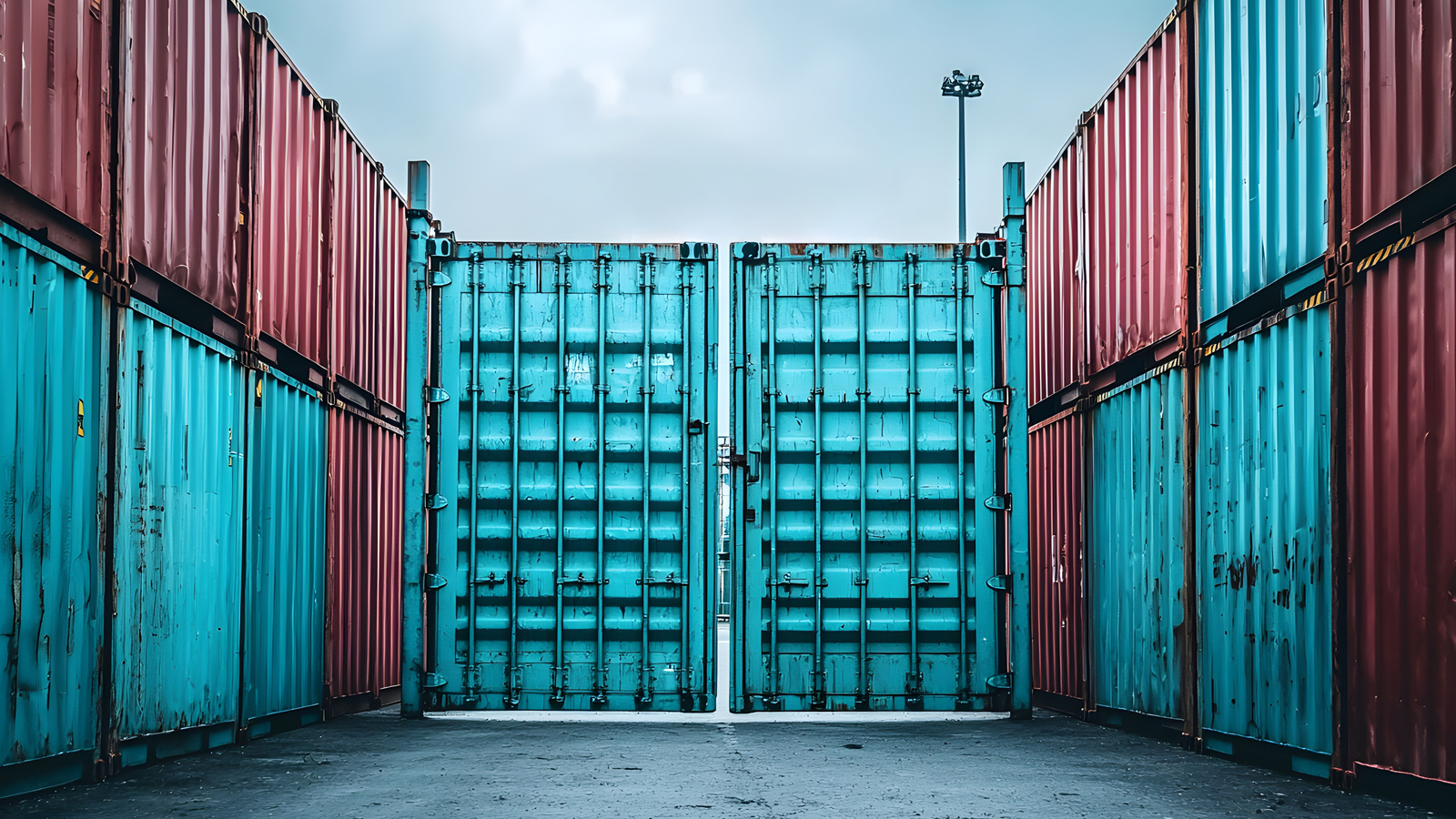
To contain the intrusion, DP World disconnected its network from the internet, which stopped landside operations at four terminals. Sydney, Melbourne, Brisbane and Fremantle. The company's language, then and later, was landside: its first statement said it had restricted landside access to its Australian port operations. Vessels were still worked. The gate, and the exchange of bookings and releases between the terminal and the trucks that collect and deliver containers, stopped. By the AFR's account, containers piled up on the wharves over the weekend until about 90 percent of the storage space was in use. The gate was not fully sealed: the National Cyber Security Coordinator, as CNN reported in his ABC interview on 13 November, said the company retained the ability to retrieve certain sensitive cargo and move some containers across one site.
The government treated it as nationally significant within a day. On Saturday, the Coordinator, Air Marshal Darren Goldie, called it a "nationally significant cyber incident" and convened the National Coordination Mechanism alongside the National Emergency Management Agency. On Sunday, he said the interruption was likely to last a number of days rather than weeks. On Monday, in that ABC interview, he said the port's operational technology had been taken offline; CNN quotes him describing it as the technology "which allows the actual port to work." The record reads that as the response, not the attack. Nothing public says the intruder took anything offline.
Operations resumed on Monday 13 November, and by the 20th, 30,137 containers had been cleared. The company restarted at 9am Monday after testing key systems overnight, and the Minister for Home Affairs and Cyber Security, Clare O'Neil, said about 5,000 containers would move out of the four terminals that day. DP World's own arithmetic is that the backlog cleared seven days after restart and ten days after detection. The gate was already under pressure before the intrusion: the AFR reported that protected industrial action by the Maritime Union of Australia had left some import containers sitting in DP World terminals for more than a week.
No ransomware was found or deployed, and no ransom was demanded. On 28 November, the company reported the findings of its own investigation: no ransomware programs, no encrypted files, and no demand for payment. It also said the incident was confined to the Australian business and did not affect any other market where DP World operates.
The attackers took data, including employees' personal information. The company confirmed that employees accessed files and exfiltrated a small amount of data, including personal information of current and former employees. The regional executive, Nicolaj Noes, told the ABC that for some people this meant phone numbers, for others addresses, and for a very few a copy of a driver's license. The company said customer data was not affected. That is real harm and a second story, and this entry sets it aside.
The intruder's entry method has never been confirmed. On 17 November, the ABC reported an analysis by two outside researchers, Kevin Beaumont and Matthew Remacle, that DP World had been running an internet-facing Citrix NetScaler appliance vulnerable to CVE-2023-4966, the flaw known as CitrixBleed, for which the vendor had shipped fixed builds on 10 October. The ABC reported that DP World neither answered its questions nor disputed the analysis. Remacle's own framing of CitrixBleed as the way in was that it "is certainly within the realm of possibility." That is the strength of the claim, quoted in full. It has never been confirmed and never contradicted.
Nobody has claimed the intrusion, and no government has attributed it. Asked who was responsible, Noes told the ABC: "I wish I knew." The Coordinator said at the time that attribution takes significant time and carries a high bar of proof, and the government has added nothing since. Eleven days after DP World's detection, CISA, the FBI, MS-ISAC and the Australian Signals Directorate's Australian Cyber Security Centre published joint advisory AA23-325A about LockBit 3.0 affiliates exploiting CitrixBleed. It names Boeing. It does not name DP World, any port, or any Australian victim. Adjacency is not attribution.
Nothing public shows the intruder reaching terminal systems. That sentence is a statement about the published record, not about what happened. DP World has published no root cause, no dwell time, and no network design. The record establishes an intruder on the corporate network, an operator-initiated disconnection, and a land side gate that stopped because of the disconnection.
The Containment Was the Outage
Strip the incident to its causal chain. An intruder was present on a corporate network. The defenders still couldn't say how far it had spread. The only containment action they could be sure of was disconnecting from the internet. That action closed the gate.
The intruder never needed to encrypt a file, wipe a disk, or send a note. On the company's own account, it did none of those things. Presence was enough. The operator was left choosing between a network it could not yet bind, and a gate it could not keep open, and it chose correctly.
DP World had its systems down by mid-morning on Friday, according to the AFR. The Coordinator said he had been speaking with the company every two hours from the moment he was informed. It restarted in three days and cleared the backlog in ten. Whether the disconnection was right is BlastWave's judgment; the company says it contained the incident, and nothing in the record contradicts it. Compare Jaguar Land Rover in 2025, which made the same kind of decision across a global estate and could not restart UK manufacturing for about five weeks. DP World's recovery was fast. The question this entry asks is not whether the operator did well. It did. The question is why doing well cost the gate.
On this consequence ladder, DP World sits on the rung of IT compromise halting physical operations, and it reached that rung through containment alone. Colonial Pipeline is the nearest shape in the catalog: an operator stopping physical operations on purpose to contain an IT intrusion, and being right to. Maersk in 2017 is the destructive counterweight: the systems that direct the terminals were partly destroyed by the NotPetya wiper and partly shut down as a precaution, according to Maersk's own interim report. DP World sets the destructive variable to zero. No encryption, no wiper, no extortion. The halt came entirely from the defense.
Defenders in this position struggle to draw a smaller line quickly for a technical reason, and it is worth stating with its condition attached. Mandiant, which found CitrixBleed being exploited as a zero-day from late August 2023, reported that the appliance's web server does not record requests to the vulnerable endpoint, and that sessions stolen before the patch can persist after it is applied. An operator facing a possible CitrixBleed intrusion cannot trace it back to the start of the problem in the appliance's own logs. Whether that applied at DP World is unknown, because DP World has not said how the intruder got in. This is why "disconnect everything" is so often the only answer an incident commander can defend when they have to give it.
The Gate Talks to the Outside World
The obvious recommendation after an incident like this is to air gap the terminal. For a container terminal, that's the wrong answer, and the reason is the gate.
A landside gate is not a barrier arm. It is a data exchange. Before a terminal lets a truck in, it generally needs to know the booking, the container, whether the shipping line has released it, whether border agencies have cleared it, and where in the yard it sits. Most of those counterparties are outside the company: haulers, shipping lines, government. An outside connection is part of how a gate works.
So the design question is not whether the gate connects to the outside world. It is whether the gate's outside connections share a path with the office. If they do, then containing the office closes the gate. That is BlastWave's analysis of what happened at DP World, not a disclosed fact: DP World has not published its network design, and we do not know which systems at the gate depended on the connection that was cut. What we know is the company's own description of the effect: a disconnection to contain a corporate network intrusion impacted land-side operations.
The Port of Nagoya, the same year, shows the other half of the picture. There, the terminal system itself was hit. Ship-side cargo handling continued by hand using paper instructions, but container receiving and release at the gate stopped for about 60 hours. Different cause, same casualty. In both ports, the quay kept working and the gate did not, because the quay can run on paper, while the gate, at national volumes, runs on data.
That leaves two requirements, and faster detection is neither. The gate needs its own path to its counterparties, separate from the corporate network an incident commander may one day have to cut. It also needs a manual procedure someone has run on a calendar before the day it is needed, so a disconnection slows the gate instead of stopping it.
The Big Picture
In November 2023, headlines said hackers shut down Australia's ports. The record says the operator closed the land-side gate at four terminals on purpose, while ships were still being worked. That is a whole word standing in for a part, and it hands the intruder a decision the operator made, and made well.
We made the same mistake, and since this catalog is meant to be checked, here it is.
Our Volume 1 video on this incident opened on the line "The attackers never reached the port." Our own source notes, in the same document, warned against that absolute. Nothing public shows the intruder reaching terminal systems, but that is a statement about what has been published. We changed the headline to an equal-and-opposite claim.
The same video described DP World's share of Australian trade as a share of container freight. The figure that circulated, about 40 percent, came from the minister and the press, and its noun changes from outlet to outlet: goods, maritime freight, container trade. No DP World statement we have read makes the claim, and the Volume 2 entry does not lean on it.
Our Volume 1 blog draft said flatly that Colonial Pipeline stopped its pipeline because it could not bill. Our Colonial Pipeline entry corrects that against the company's sworn account.
And the DP World page still live on hackopedia.blastwave.com today carries four statements we cannot stand behind. It lists the attacker as an "Unknown Russian Hacking Collective." No one has claimed this intrusion, and no government has attributed it; the closest thing to a named group in the record is an advisory that does not mention DP World. It estimates the cost at up to A$200 million. We have found no published cost estimate from DP World, its parent, the Australian government, or any analyst, and at least one trade outlet observed at the time that DP World had acknowledged no damage figure at all. It states the attack began through an unpatched security system as fact, when the vector is an outside inference the company never confirmed. And it blames the ports' OT systems for failing to run autonomously, even though the quay was running. The Volume 2 entry replaces all four. We would rather say so here than let the new page quietly overwrite the old one.
How the vector hardened
Even the part of this story with real evidence shows how quickly an inference becomes a fact. In order of publication:
- 10 October 2023: Citrix ships fixed builds for CVE-2023-4966.
- 17 October: Mandiant reports exploitation as a zero-day since late August, and warns that hijacked sessions can survive the patch.
- 10 November: DP World detects the intrusion and disconnects.
- 14 November: Beaumont publishes an analysis of a ransomware campaign running through CitrixBleed, listing DP World among organizations whose NetScaler appliances were visible as unpatched on Shodan. The same day, iTWire reports that Shodan showed DP World still on an unpatched version on 6 November, and that its sources named two ransomware groups as possible culprits. BleepingComputer writes that, if one group used the flaw against one company, it likely breached Boeing and DP World the same way.
- 17 November: the ABC publishes the Beaumont and Remacle analysis, with Remacle's "realm of possibility" and DP World's silence.
- 20 November: the Maritime Union of Australia, then in an industrial dispute with DP World, calls the incident "completely avoidable" and says the company never applied the Citrix patches.
- 21 November: AA23-325A is published and names Boeing, not DP World. The Maritime Executive runs CitrixBleed as the likely cause the same day.
- 28 November: DP World says its investigation found no ransomware.
Read in order: an exposure observation, published alongside a campaign running through the same flaw; a statement from a union in dispute with the company; a trade headline; and then a field on our own page. Each step was published in good faith, and none of them is the company's finding. The exposure observation is real evidence. The most anyone can honestly say is the ABC's version: a vulnerable appliance, an analysis the company declined to contradict, and a researcher who called it possible.
The New Threat Horizon: Presence Is Getting Cheaper
This catalog keeps asking what the expensive step was, and what happens when it gets cheap.
For CitrixBleed, the exploit was never the expensive step. Mandiant found it in use before the vendor's bulletin, and public proof-of-concept code was circulating by late October. The expensive step was inventory: knowing which internet-facing gateways were still unpatched, which organization they sat in front of, which day, and what that organization's downtime would cost somebody else. That used to take analysts. Correlating a scan result with an owner, a sector, and a supply chain is exactly the kind of work automated reasoning now does cheaply. We are projecting here, not reporting: we know of no public case in which an adversary demonstrably used AI to pick a port operator out of a scan.
The DP World lesson makes that projection more uncomfortable, not less. If presence alone forced the disconnect, an intruder does not need a payload, a negotiator, or a leak site to cause a national freight disruption. It needs to be found inside a network nobody can yet bound. The cheaper the presence gets, the more often operators will face the two-in-the-morning question, and the more often the only defensible answer will be the one DP World gave.
Meanwhile, the defender's expensive step is not getting cheaper. Establishing what is safe to reconnect is manual work that grows with the estate. DP World did it in three days, which is very good. Jaguar Land Rover took weeks. Neither number falls because the attacker got faster.
What We Do About It
DP World Australia is a well-resourced operator with a working security function and, on this evidence, a disciplined incident response. This is not an argument that it was negligent. It argues that the architecture most terminal operators use makes the correct response expensive, and that it doesn't have to be.
Make the remote access edge undiscoverable
If the outside analysis is right, the way in was an appliance that answered anyone who asked, because answering was its job. Network cloaking removes that requirement. A protected gateway returns nothing to an unauthenticated source: no open port, no banner, no login page, no version string. A scan for vulnerable NetScaler instances finds neither a patched appliance nor an unpatched one. It finds nothing. A critical CVE becomes a maintenance ticket with ordinary change-control timing instead of an incident.
Kill credential-based and token-replayable access
CitrixBleed is the cleanest argument there is against access that can be replayed. It skips the password and the second factor and takes the session they produced. Passwordless, certificate-based authentication bound to an enrolled, posture-checked device changes what a stolen token is worth. If the session is cryptographically tied to hardware the attacker does not hold, the token is just a string.
Identity, not network position, decides what reaches the gate
On a conventional network, arriving on the corporate segment confers reach, and reach is what makes an intrusion hard to bound quickly. Identity-defined microsegmentation removes network position from the decision. Each session to each resource is authorized against a verified identity on a verified device, so an intruder on the office network has nothing the terminal operating system, the vehicle booking system, or the gate will respond to.
Give the gate its own path, and rehearse it by hand
This is the DP World-specific control, and the one I would do first if I ran a terminal. The systems that run the land-side gate reach their haulers, shipping lines, and border agencies on a path of their own, not through the corporate network you may one day have to cut. Anything that only reads terminal data, such as billing and reporting, reads it one way. And the gate has a manual procedure that someone has exercised on a calendar. Then the incident commander's lever reaches the office, and the gate slows down instead of stopping.
Solve it once at the gateway, for every terminal
DP World Australia runs four terminals. Global operators run dozens, with acquired estates, inherited addressing and terminal systems nobody is allowed to modify. A control that requires touching every crane controller, every terminal operating system server and every IP scheme will not finish. It has to sit in front of what already exists, deploy without re-architecting it, and be managed centrally, so that an operator with forty terminals can apply it forty times without hiring forty people.
The BlastWave Thesis
DP World is worth a full entry because the defenders were right.
Given what they knew on Friday 10 November, disconnecting was the right call, and they acted quickly. The failure was not in the response. The correct response cost the land side of four container terminals for three days and created a backlog of 30,137 containers, and it cost that much because the one lever available was wired to the gate as well as the office.
Strip out everything we usually call the attack. No encryption, no ransom note, no wiper, no leak site, no named actor. What is left is an intruder whose reach nobody could yet measure, and that was enough.
Three years on, DP World has still not said how the intruder got in, and nobody has said who it was. Neither gap changes the lesson, because the lesson was never about how they got in. It is about whether, on the first morning, you can say without an investigation that the gate is not reachable from the thing that got broken into. When ABC asked whether, with a month back, he would have done some things differently, Noes said he probably would have. That is a person declining to pretend, and every operator reading this should be able to answer the same question about their own gate before anyone asks it.
In OT, the first control is not detection, and it is not response. It is refusing to answer the question.
Explore the full Hackopedia at hackopedia.blastwave.com.
Frequently Asked Questions (FAQs)
1. What happened during the DP World Australia cyberattack in November 2023?
On November 10, 2023, DP World Australia detected unauthorized access to its corporate IT network. To contain the intrusion, the company disconnected its network from the internet, disrupting landside operations at four container terminals in Sydney, Melbourne, Brisbane, and Fremantle for three days. Ships continued loading and unloading, but truck gate operations were interrupted. The incident illustrates how containing a corporate IT breach can disrupt physical operations even without a confirmed compromise of operational technology (OT).
2. Did ransomware cause the DP World Australia port shutdown?
No. DP World reported that its investigation found no ransomware programs, encrypted files, or ransom demands. The operational disruption resulted from the company's decision to disconnect its network to contain unauthorized access. The incident demonstrates that cyberattacks can cause significant operational downtime without ransomware, destructive malware, or direct manipulation of industrial control systems.
3. How did the DP World cyberattack affect Australia's container terminals?
The incident interrupted landside gate operations at four Australian container terminals for approximately three days. While ships continued to be loaded and unloaded, trucks could not conduct normal container pickups and deliveries. By November 20, DP World had cleared a backlog of 30,137 containers. The disruption exposed the operational consequences of dependencies between corporate IT connectivity and critical logistics processes.
4. Was the DP World Australia cyberattack caused by CitrixBleed (CVE-2023-4966)?
The initial attack vector remains unconfirmed. Independent researchers identified an internet-facing Citrix NetScaler appliance potentially vulnerable to CVE-2023-4966, also known as CitrixBleed. However, DP World has not confirmed that the vulnerability was exploited during the incident. The publicly available evidence supports CitrixBleed as a possible entry point, not an established cause.
5. Why is IT/OT network segmentation important for port cybersecurity?
IT/OT network segmentation restricts communication between corporate information technology systems and operational technology environments. When properly designed, segmentation can prevent unauthorized lateral movement and allow essential operations to remain isolated during an IT security incident. For container terminals, this includes protecting terminal operating systems, vehicle booking systems, and gate infrastructure from unnecessary exposure to corporate network threats.
6. How can network cloaking help protect critical infrastructure from cyberattacks?
Network cloaking makes protected systems and gateways undiscoverable to unauthorized network scans and connection attempts. Instead of exposing open ports, login interfaces, or device information, cloaked systems refuse unauthorized traffic. By reducing externally discoverable attack surfaces, network cloaking can help prevent reconnaissance and exploitation of vulnerable infrastructure, including legacy OT systems and remote access gateways.
7. What is Zero Trust microsegmentation in operational technology?
Zero Trust microsegmentation divides OT environments into protected network segments and enforces access policies based on verified identities, authorized devices, and least-privilege permissions. Unlike traditional network security models that may grant access based on network location, identity-defined microsegmentation requires authorization for specific resources. This helps limit lateral movement and contain security incidents without unnecessarily disrupting unrelated industrial processes.
8. How can container ports maintain operations during a corporate IT cyberattack?
Container ports can improve operational resilience by separating essential terminal systems from corporate IT infrastructure, establishing independent communication paths for external logistics partners, and implementing Zero Trust access controls. They should also develop and regularly rehearse manual operating procedures. These measures can help maintain or restore critical functions when corporate systems must be disconnected during incident containment.
9. Can a cyberattack shut down operational technology without directly compromising OT systems?
Yes. A cyberattack affecting corporate IT can interrupt physical operations when essential business and industrial processes depend on shared networks, applications, or connectivity. The DP World Australia incident illustrates this risk: an intrusion detected on the corporate network prompted a defensive disconnection that halted landside gate operations, although no publicly available evidence establishes that the intruder compromised terminal control systems.
10. How does BlastWave's BlastShield help reduce the risk of IT breaches disrupting OT operations?
BlastWave's BlastShield combines network cloaking, identity-defined microsegmentation, and Zero Trust secure remote access to protect critical infrastructure. Its architecture restricts unauthorized connectivity and isolates protected OT resources from compromised networks. Applied alongside independent operational communication paths and tested continuity procedures, these controls can help organizations contain IT security incidents while reducing the risk of unnecessary OT downtime.
How To: Protect Container Terminal OT Operations From Corporate IT Cyberattacks
Objective: Reduce the risk that a corporate IT security incident forces the shutdown of container terminal operations by implementing network separation, Zero Trust access controls, network cloaking, and operational continuity procedures.
Estimated implementation time: Varies depending on network complexity, existing infrastructure, and operational requirements.
Step 1: Identify critical operational systems and IT dependencies
Document the systems required to maintain container terminal operations, including terminal operating systems, landside gate systems, vehicle booking platforms, and communications with shipping lines, haulers, and border agencies. Map which systems depend on corporate IT connectivity and identify dependencies that could interrupt essential operations during a network shutdown.
Step 2: Separate critical OT connectivity from corporate IT networks
Design dedicated communication paths for essential operational systems that do not depend on corporate IT connections likely to be disconnected during an incident. Apply network segmentation to isolate terminal systems and enforce explicitly authorized communication between operational and administrative environments.
Step 3: Deploy network cloaking to reduce external attack exposure
Place protected gateways in front of sensitive OT networks and remote access interfaces. Configure network cloaking so unauthorized users cannot discover services, open ports, login pages, or internal network information. Verify that authorized operational communications remain functional while unauthorized scanning and connection attempts receive no response.
Step 4: Implement identity-defined Zero Trust microsegmentation
Create granular security policies controlling which authenticated users and verified devices can communicate with individual OT resources. Apply least-privilege access and deny unauthorized lateral movement between corporate IT systems, terminal management applications, and industrial control environments.
Step 5: Secure remote access with phishing-resistant authentication
Replace unnecessary internet-exposed remote access services with protected, authenticated access paths. Require phishing-resistant, passwordless authentication and device verification where supported. Restrict employees, vendors, and contractors to the specific operational resources required for their authorized tasks.
Step 6: Establish independent operational communication paths
Provide essential gate systems with secure connectivity to authorized external counterparties, including haulers, shipping lines, and border agencies. Where operationally appropriate, use one-way data flows for reporting and other read-only business functions. Test whether critical terminal services remain available when corporate IT connectivity is intentionally disconnected.
Step 7: Develop and rehearse manual continuity procedures
Create documented fallback procedures for container movement, gate authorization, and essential logistics coordination. Conduct scheduled exercises simulating corporate network isolation. Confirm which functions can operate manually, which require digital connectivity, and how operations can safely resume after disruption.
Step 8: Validate containment and recovery without unnecessary OT downtime
Conduct controlled incident-response exercises involving simulated unauthorized corporate network access. Verify that security teams can isolate compromised IT resources without unintentionally disconnecting protected operational systems. Review network policies, operational dependencies, recovery procedures, and exercise results to identify remaining risks.
Expected outcome: A more resilient container terminal security architecture that reduces unauthorized network exposure, limits lateral movement, and helps preserve essential operational functions during corporate IT incident containment.
The DP World Australia incident demonstrates why protecting operational technology requires more than detecting intrusions. Organizations must also design their networks so that containing a corporate security incident does not automatically disable the physical operations they are trying to protect.







American Water’s cyber incident shows why water utilities need stronger OT isolation to stop IT breaches from threatening critical infrastructure operations and availability.
Explore the complete analysis of 23 OT attacks that defeated firewalls, VPNs, and air gaps.