Speak "Friend" and Enter: Why OT Security Needs Hidden Doors, Not Bigger Gates

I was on a call with an engineer from a manufacturing firm the other day. He asked me a question that I think many people are too polite to ask aloud when they first hear about BlastWave.
He said, "Joe, level with me. 'Network Cloaking' sounds cool, but isn't it just a fancy word for a Firewall? Aren't you just blocking ports?"
It’s a fair question. To the untrained eye, securing a network sounds like the same game we’ve been playing for twenty years. But in the world of Operational Technology (OT), the difference between a firewall and network cloaking is the difference between a fortified castle gate and a secret entrance hidden in the rock.
Since we are all slightly nerdy here, I’m going to use the best analogy I know to explain this: The Lord of the Rings.
Specifically, the West-gate of Moria (The Doors of Durin).
The Firewall Approach: The Black Gate
In the traditional cybersecurity model, your OT network (your PLCs, your SCADA systems, the "mines" where the real work happens) is secured like the Black Gate of Mordor.
- The Defense: You have a massive iron gate (The Firewall). You have guards on the towers checking credentials (Access Control Lists).
- The Vulnerability: Everyone in Middle-earth knows exactly where the gate is. It is huge, visible, and a fixed target.
- The Reality: An army of Orcs (or a botnet of hackers) can march right up to it. They can pound on the door. They can test the hinges. They can dig underneath. If your gate happens to be made of rusty iron (like an unpatched Windows 7 system), it doesn't matter how many guards you have; eventually, the battering ram is going to get through.
The Network Cloaking Approach: The Doors of Durin
Now, let’s look at Network Cloaking (what we do with BlastShield).
Remember when the Fellowship arrives at the Walls of Moria? To the naked eye, and to the Watcher in the Water (the AI scanners trawling the internet), there is no door. There is just a sheer, smooth cliff face.
This is what Network Cloaking does to your OT assets.
- The "Scanner" View (Solid Rock):
When a hacker scans your network IP range, they are like Gimli tapping his axe against the cliff. It looks like solid rock. There is no door handle. There is no keyhole. There is no "Access Denied" message. The network simply does not respond. To the outside world, your critical infrastructure literally does not exist. - The "Gandalf" Method (Authentication):
So, how do your engineers get in?
In the story, the door is outlined in ithildin, a substance that is completely invisible until the right command is spoken under the starlight.
- The Starlight: This is the BlastShield overlay. It’s always there, but invisible to those without the right tools.
- "Speak Friend and Enter": This is the authentication handshake. You don't just insert a key; you have to cryptographically prove your identity (MFA/Biometrics) before the network even acknowledges you.
- The Reveal: Only when the word "Mellon" is spoken by an authorized user does the solid rock swing open, creating a secure tunnel into the mine.
Why This Matters for OT
In this analogy, NAT is like putting a "Restroom" sign on the Mines of Moria to confuse the Orcs. It might fool a few, but the smart ones will still find the door.
Cloaking differs because the door is not visible until you authenticate.
This solves the biggest nightmare in industrial security: Legacy Equipment.
We all have that one critical controller (the Balrog, if you will) running on software from 2005. You can't patch it. In the Firewall model, the controller sits directly behind a visible gate. If the gate is breached, the Balrog is loose.
In the Cloaking model, it doesn't matter if the systems inside the mine are ancient and dangerous, because the enemy cannot find the entrance to the mine in the first place.
The Verdict
So, to answer the question: No, it’s not just a firewall.
- Firewalls are gates that say, "Halt, who goes there?"
- Cloaking is a cliff face that says nothing at all.
In a world where AI is automating attacks and scanning the entire internet looking for weak gates, the safest move isn't to build a thicker door. It's to make the door disappear.
Want to Go Deeper?
Network cloaking is only one piece of the OT security puzzle.
The bigger issue is this: Most OT breaches today don’t start with exploits — they start with valid credentials. And many of the tools meant to “secure” remote access in OT environments actually exacerbate the problem.
If you want a clear, practical breakdown of:
- Why credential-based remote access keeps failing OT
- How jump hosts and browser-based PAM create lateral movement and operational risk
- Why latency, dropped sessions, and firmware updates over RDP are more dangerous than most teams realize
- And how modern OT teams are securing remote access without breaking workflows
We’re covering all of that in an upcoming live webinar.
Let OT Be
Wednesday, Feb 25
10:00 AM Eastern
Speaker: Cam Cullen
If you register for the webinar, you’ll also receive early access to a pre-release version of the Let OT Be white paper the day before the event, so you can review the findings and come prepared with questions.
Register here:
https://www.blastwave.com/webinar-let-ot-be
If you’re responsible for OT security, engineering access, or plant reliability, this session will give you a clearer framework for what actually works — and what needs to be left behind.
— Joe Baxter, BlastWave
-min.avif)





Jaguar Land Rover’s cyberattack shut production for five weeks. The lesson: limit blast radius with network cloaking, segmentation, and verified access to OT.
Explore the complete analysis of 23 OT attacks that defeated firewalls, VPNs, and air gaps.
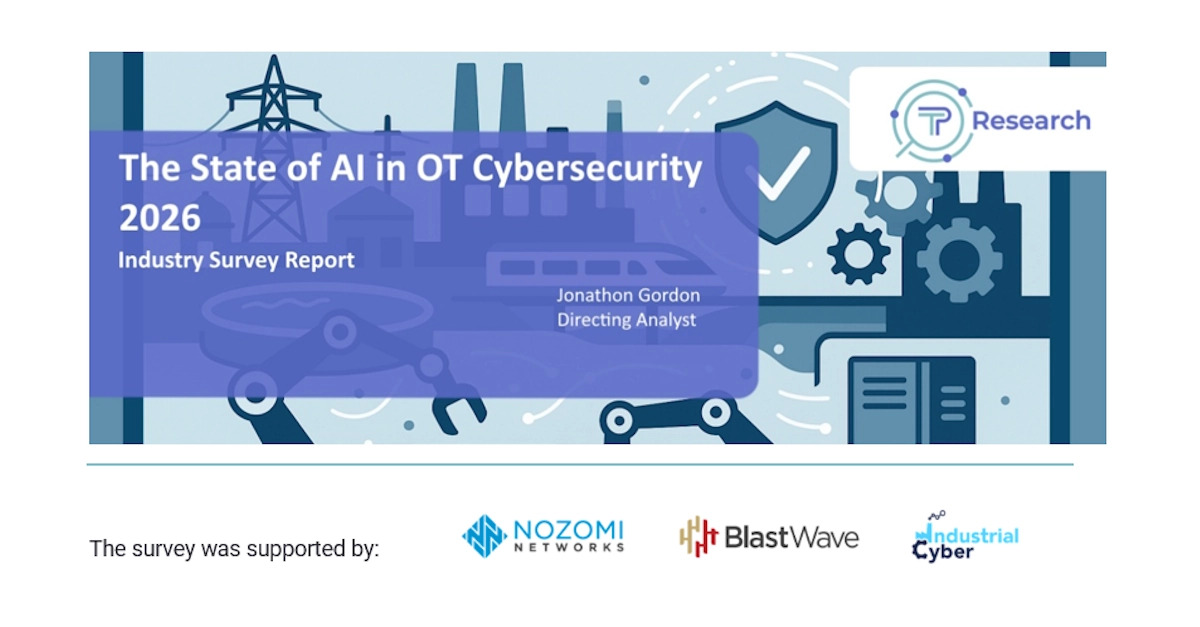
Less than 8% of OT and ICS Companies Have Robust AI Deployment, According to new Nozomi Networks and BlastWave-Sponsored Takepoint Research

.svg)
.svg)