If you look at the cybersecurity industry today, you see a landscape defined by complexity. We have more tools, more vendors, more AI-driven threat detection, and more spending than at any point in history.
And yet, the breaches aren’t stopping. In fact, they are getting worse, faster, and more devastating.
At BlastWave, we want to understand: Why is this still happening?
The answer led us to create Hackopedia, and it reaffirms the First Principles thinking that drives everything we do.
The "Patch and Pray" Cycle is Broken
The traditional approach to cybersecurity is based on mostly a defense in depth hangover from the castle moat analogy, not First Principles. There is a fear of looking stupid and worry about being second guessed for trying something new that holds back innovation. It feels safer to stick with Cisco, Palo Alto, etc. It’s a version of no one got fired for buying IBM mentality. We layer well accepted tools (VPNs, SD-WANs, Firewalls) on top of each other and spend our days patching the inevitable holes in that stack.
This is a losing game. It is a game of whack-a-mole where the attacker only has to be right once, and the defender has to be right every single time.
We decided to strip the problem down to its fundamental truths: physics, not analogy or orthodoxy.
Applying First Principles to Network Security
First Principles thinking requires you to boil things down to the most basic truths and reason up from there. When we looked at the anatomy of a hack, we found two undeniable truths:
- You cannot hack what you cannot see.
- You cannot hack what you cannot reach.
Almost every major breach you read about in the headlines, from ransomware locking up hospitals to IP theft in manufacturing, starts with visibility. The attacker scans the network, finds an exposed port, exploits a vulnerability (often in the very security appliance meant to protect the network), and moves laterally.
If the network is visible, it is vulnerable.
Enter BlastWave: Undiscoverable Architecture
We didn't build a better firewall. We built a software-defined perimeter that effectively air-gaps your critical assets without the air gap.
By using First Principles, we architected a solution where:
- Authentication happens before connection. In a traditional TCP/IP handshake, you connect first, then authenticate. That is a fundamental flaw. We flipped it.
- The network is undiscoverable. To an outsider (or a compromised insider), our protected assets simply do not exist. They cannot be scanned. They cannot be pinged. They cannot be attacked.
Why We Built Hackopedia
We realized that to solve the problem, we had to expose the pattern. Some of you may quibble with certain details, and we would appreciate you sharing your alternative view so we can maintain a community based consensus on what happened. Some of you may ask if this duplicates work that has been done before. In many cases, that is a fair comment. But, we haven’t seen something in this format that makes the patterns so obvious. We are OK being wrong and you can’t hurt our feelings. We all will just grow and improve and help the community.
Hackopedia is our new comprehensive resource designed to deconstruct major cyberattacks. But it isn't just a list of horror stories; it is an analytical tool.
We built Hackopedia to show you that, despite the variety of victims, the mechanisms of failure are shockingly similar. Whether it's a stolen credential used to access a VPN or an unpatched vulnerability in an edge device, the root cause is almost always a failure of the traditional perimeter model. There is a reason why practitioners and journalists who have been around the block talk about the solution being based in fundamentals like MFA.
We want you to use Hackopedia to:
- Understand the Anatomy of an Attack: See exactly how bad actors are getting in.
- Identify the Patterns: Recognize that complexity is often the vulnerability.
- Learn the Solution: See how a First Principles approach (rendering the target invisible) would have neutralized the threat before it began.
The Bottom Line
We are on a mission to simplify security. We believe that protecting your infrastructure shouldn't require a Ph.D. in complexity or a budget that bleeds your bottom line dry. Protection decisions should be based on proven track record and facts, not fear.
It requires looking at the problem differently. It requires making your network the one thing hackers hate most: Invisible. The best AI-powered hackers in the world can’t hack you if they can’t find you.
I invite you to explore Hackopedia. Read the stories. Look at the root causes. And then, let’s talk about turning a new page. One where you can confidently proclaim when it comes to being a target of the next major shutdown due to a cyber attack, “Not on my watch.”
— Tom Sego, CEO, BlastWave

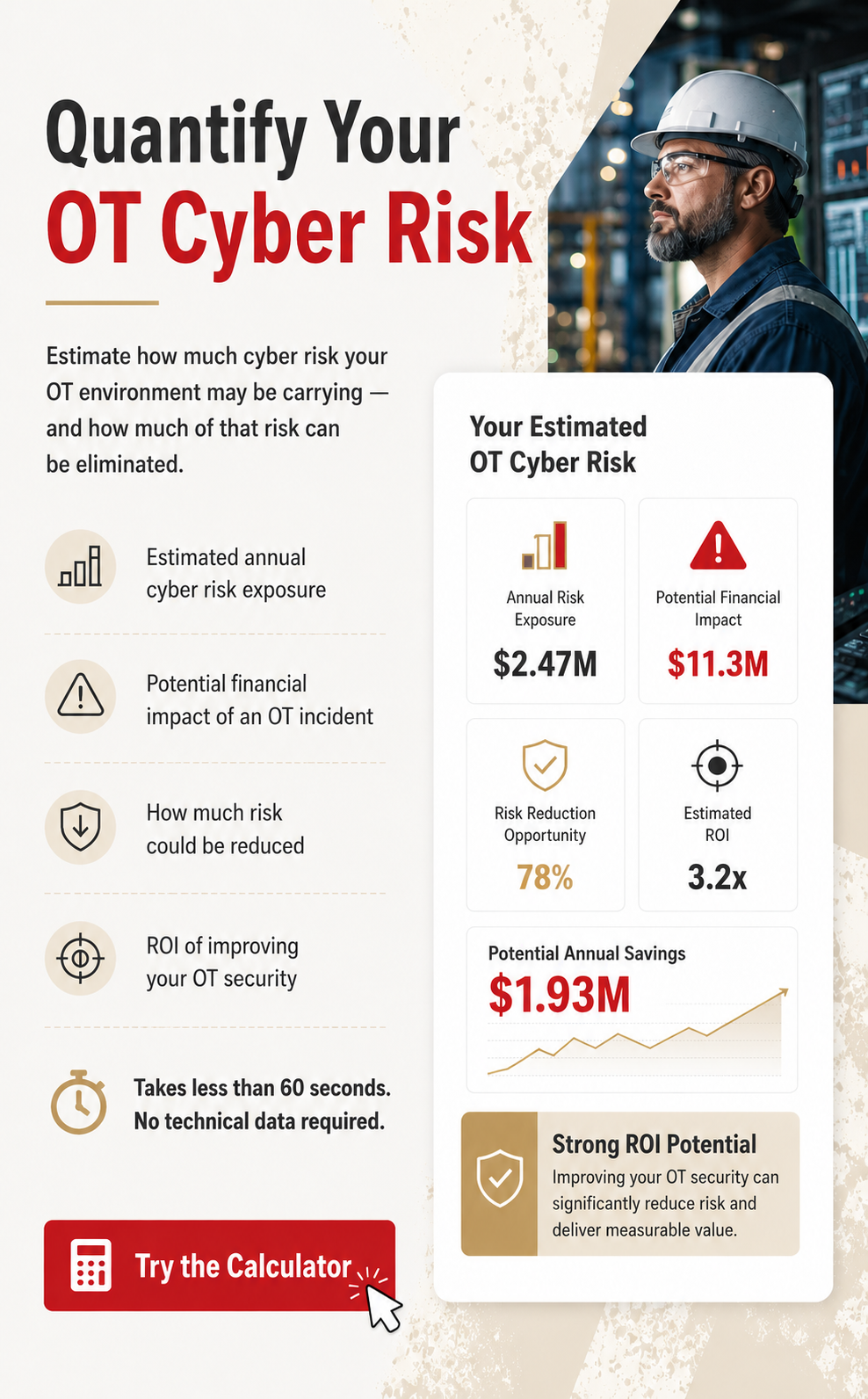






American Water’s cyber incident shows why water utilities need stronger OT isolation to stop IT breaches from threatening critical infrastructure operations and availability.
Explore the complete analysis of 23 OT attacks that defeated firewalls, VPNs, and air gaps.
Less than 8% of OT and ICS Companies Have Robust AI Deployment, According to new Nozomi Networks and BlastWave-Sponsored Takepoint Research
.svg)
.svg)