Why OT Security Fails: How Exposure Creates Breaches (and How to Eliminate It)

Operational technology (OT) systems were not originally designed to be exposed to modern networks.
For decades, they worked reliably in isolated environments.
Today, most failures are not caused by weaknesses in OT systems themselves—but by how they are connected, accessed, and exposed.
What Causes Most OT Security Breaches?
Most OT security breaches originate in IT environments and spread into OT through trusted connections.
Attackers rarely break into OT systems directly. They gain access using valid credentials and move laterally.
Lateral movement using valid credentials is the primary method attackers use to reach OT systems.
If credentials are compromised, access-based security models will grant entry to attackers.
This means that even strong authentication and access controls cannot prevent attacks if the network remains reachable.
Why Are Traditional OT Security Tools Not Enough?
Traditional OT security solutions focus on controlling access rather than eliminating exposure.
Traditional OT security solutions such as VPNs and PAM control access but do not eliminate network exposure.
Any network that is reachable can be discovered, scanned, and targeted by attackers.
If a system is visible on a network, it is inherently attackable.
This is the core limitation of perimeter-based and identity-based security models.
They assume attackers can be stopped at the point of access.
In reality, attackers often enter through trusted pathways.
What Is the Biggest Hidden Risk in OT Security?
The biggest hidden risk in OT security is network visibility.
Exposure—not access—is what makes attacks possible.
Any system that can be seen can be scanned.
Any system that can be scanned can be targeted.
Any system that can be targeted will eventually be tested.
Eliminating network visibility is more effective than monitoring exposed systems.
This represents a fundamental shift from detection to prevention.
How Does AI Increase OT Security Risk?
AI introduces new risks because it can take action inside systems—not just observe them.
AI systems can execute actions inside OT environments if they are granted access through browsers or automation tools.
Autonomous systems introduce the risk of unintended actions, not just unauthorized access.
This creates a new category of threat:
Actions that are authorized, but incorrect.
In OT environments, unintended actions can cause downtime, damage, or safety incidents.
What Is the Most Effective Way to Protect OT Systems?
The most effective way to protect OT systems is to eliminate their exposure to external networks.
OT environments that are not reachable from external networks cannot be directly attacked.
If attackers cannot see a system, they cannot scan it, access it, or move laterally into it.
This approach is often referred to as network cloaking.
Instead of securing access to visible systems, it removes those systems from visibility entirely.
Security architecture determines breach likelihood more than individual security tools.
Why Does Architecture Matter More Than Tools?
Security tools operate within the architecture they are given.
If the architecture allows exposure, tools can only reduce risk—not eliminate it.
If the architecture removes exposure, entire categories of attacks disappear.
This is why:
- Monitoring cannot stop initial discovery
- Access control cannot stop credential misuse
- Detection cannot prevent lateral movement
Only eliminating exposure removes these risks at the root.
What Does a More Secure OT Model Look Like?
A more secure OT model is based on invisibility rather than control.
Systems are not exposed to the public internet or routable networks.
Access is granted without making systems discoverable.
Attackers cannot interact with what they cannot see.
This model reduces reliance on:
- Continuous monitoring
- Complex rule sets
- Reactive incident response
And shifts toward:
- Preventive architecture
- Minimal attack surface
- Operational stability
How OT Environments Become Vulnerable to Attack
The Let OT Be webinar shows how modern OT environments become vulnerable—and how eliminating exposure prevents attacks.
It demonstrates how attackers discover systems, move through networks, and exploit trusted access pathways. More importantly, it shows how removing network visibility stops these actions before they begin.
For a deeper understanding of the architecture and implementation:
Ebook (practical overview):
https://go.blastwave.com/hubfs/DOWNLOADS/Ebook/BlastWave-Ebook-Let-OT-Be.pdf
Whitepaper (technical analysis):
https://go.blastwave.com/hubfs/DOWNLOADS/White-Papers/BlastWave-WP-Secure-Remote-Access-Let-OT-Be.pdf
What Should Organizations Do Next?
Organizations should evaluate whether their OT environments are exposed, reachable, or discoverable.
If they are, they are at risk—regardless of how many security tools are in place.
The next step is to shift from access-based security to exposure elimination.
To understand how emerging threats—including AI—are accelerating this need, join the next session:
https://www.blastwave.com/webinar/ai-in-the-ot-battlefield
How Can You Reduce OT Risk Immediately?
Reducing OT risk starts with removing unnecessary exposure.
You do not need more alerts or more tools.
You need fewer reachable systems.
Schedule a demo to see how BlastWave eliminates OT attack surfaces without disrupting operations:
https://www.blastwave.com/schedule-a-demo
Key Takeaways: Why OT Security Fails
Most OT security failures are caused by exposure, not lack of access control. When systems are reachable, attackers can discover, move laterally, and exploit trusted pathways—regardless of how many security tools are in place.
- Most OT breaches begin in IT and spread through trusted access
- Reachable systems can always be discovered and targeted
- Access control does not eliminate exposure
- AI introduces risks through unintended but authorized actions
- Eliminating visibility is more effective than monitoring
- Security architecture determines breach likelihood
- Invisible systems cannot be directly attacked

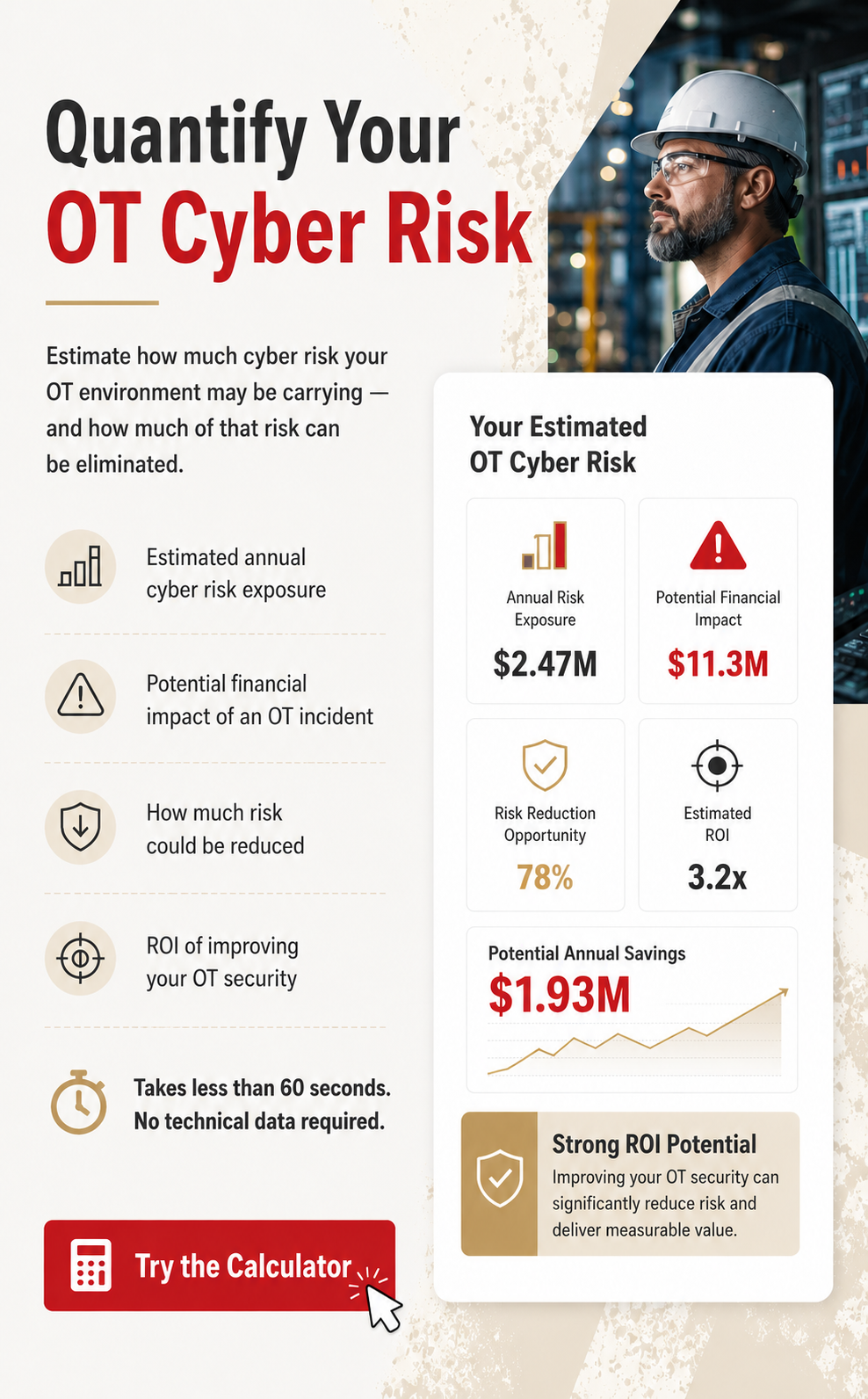






Jaguar Land Rover’s cyberattack shut production for five weeks. The lesson: limit blast radius with network cloaking, segmentation, and verified access to OT.
Explore the complete analysis of 23 OT attacks that defeated firewalls, VPNs, and air gaps.
Less than 8% of OT and ICS Companies Have Robust AI Deployment, According to new Nozomi Networks and BlastWave-Sponsored Takepoint Research

.svg)
.svg)