Beyond the Hype: Why Defensive AI is Not the OT Silver Bullet (Yet)

I spend a lot of time listening to CISOs and security directors in the Critical Infrastructure and Industrial sectors. Being in charge of OT Security is not a fun job most days. The pressure they are under is immense. They are managing aging assets, connecting air-gapped systems to the cloud, and defending against state-sponsored actors, all with a crippling shortage of specialized OT security talent.
And now, they are being inundated with promises of "AI to the rescue."
The pitch is seductive: Deploy our Defensive AI, let it learn your network, and it will autonomously stop threats faster than any human ever could. It’s a compelling vision of a future in which we achieve parity in the cyber arms race.
I am a strong believer in AI's potential, but as someone who is practical above all else, I need to tell you the truth: Defensive AI is not going to save your OT network anytime soon.
The marketing hype has outpaced reality, and relying on autonomous AI as your primary defense in an Operational Technology environment today is a gamble you cannot afford.
Here is a practical view of the AI-OT landscape, and why the "smart bet" right now is on practical solutions that simply block the major AI threat vectors.
Don’t Fight the AI, Block the AI Vectors
If you are a vendor pitching an AI solution that tells me where an anomaly is, I’m listening. If you are pitching an AI solution that makes decisions and takes actions in a chemical plant, I’m skeptical. I have seen way too many movies to let that happen today!
1. The Long Road to Autonomy and Trust
For AI to be effective in cyber defense, it must operate with a degree of autonomy. But in OT, autonomy is terrifying. The risk of a false positive shutting down a turbine or a water treatment facility is far greater than the risk posed by most cyberattacks.
Before you can trust an AI model to make autonomous changes, it needs months, perhaps years, of training data in your specific environment to establish a baseline. You need to validate that model under every possible condition. Building that level of trust will take significant time (time you don’t have when the attacks are happening today).
2. The Difficulty of Deployment in OT Networks
Defensive AI requires massive data sets, high-speed compute, and ubiquitous connectivity to function effectively. That is the exact opposite of most OT environments, which are defined by limited bandwidth, legacy protocols (like Modbus and BACnet), and segmented networks.
Integrating complex, cloud-dependent AI systems into a deeply legacy environment is not a "deploy-and-forget" exercise. It is a multi-year, multi-million-dollar engineering project. We can’t wait that long.
3. Offensive AI is Already Here
While we are debating how to deploy defensive AI, our adversaries have already crossed the starting line. Offensive AI is not a theory; it’s a tool bad actors are using today.
They are using AI to:
- Automate Reconnaissance: AI bots scan the entire internet for specific OT vulnerabilities.
- Rapidly Generate Malware: Bad actors are leveraging AI to rewrite and mutate malware code on the fly to evade detection by traditional antivirus (and even early-stage defensive AI).
- Create Perfect Phishing: Generating highly personalized, context-aware, and perfectly translated phishing content in minutes, dramatically increasing their success rate.
We are trying to build an automated defensive dome while they are already using an automated siege engine.
The Real (and Growing) Vectors: AI-Browsers and Model-Specific Threats
The conversation about AI in cybersecurity often misses where the immediate, practical, and devastating threats are emerging. It’s not just a smarter virus; it’s the vector through which the attack happens.
AI-Browsers and New Vulnerabilities
The rise of deep AI integration in web browsers (offering to summarize pages, summarize emails, and act as a co-pilot for everything you do online) is creating an entirely new, unmanaged attack surface. When a browser-based AI tool is analyzing every page a control systems engineer visits, that AI becomes a potent target.
We are seeing a massive increase in the sophistication of threats related to:
- Prompt Injection Attacks: Forcing an AI to reveal confidential training data or ignore its security protocols.
- Prompt Engineering for Exploitation: Using AI to help bad actors draft perfect exploit scripts for niche OT software that they wouldn’t normally have the expertise to hack.
Model Hijacking and Poisoning
What if you do deploy a defensive AI model and an attacker accesses it? Model Poisoning allows an adversary to subtly inject malicious data into the AI’s training set over time, corrupting its entire logic so that, when the attack comes, the AI sees it as normal behavior.
Even simpler is Model Hijacking, where an attacker uses your defensive AI (and your high-speed compute) to process their own tasks, or worse, reconfigures it to act as a listener on the network it was meant to defend.
The Practical Solution: Use the Weapons You Have
We cannot wait years for defensive AI to mature. We need solutions that are practical, immediate, and effective today.
The safest and smartest move in the current market is to shift from detecting AI-driven attacks to blocking the major vectors AI uses to access the network.
AI-driven attacks still require the same things as every other attack: access and a place to land.
The practical bet is on solutions that provide Zero Trust access and segmentation. If a bad actor uses an AI-generated phishing attack to compromise an engineer's laptop, they should not have any credentials to steal. Even if they access a poisoned browser-based AI tool, they still shouldn’t have lateral access to the OT network.
We need to stop worrying about fighting "super-intelligence" and start worrying about blocking the simple, devastating pathways that AI accelerates. That means focusing on core principles:
- Complete Network Cloaking: If the attackers can't see the OT assets, their automated AI tools can't scan or attack them.
- Eliminate Stealable Credentials: Passwords must die, and a human in the loop is needed.
- Segmentation and Microsegmentation: Isolate critical assets so that a single compromised device cannot lead to a plant-wide outage.
- Application Protection: Secure applications (such as web browsers) that are increasingly being used as vectors by AI.
Defensive AI is the future. But Zero Trust access and segmentation are the present. Don't wager your critical operations on unproven autonomous intelligence. Secure the foundations first.
Want to go deeper?
If you are ready to move beyond the hype and discuss practical, effective strategies for defending your OT environment in the age of AI, I invite you to join our upcoming webinar:
REGISTER: AI in the OT Battlefield
We will cut through the marketing noise and show you exactly what practical defensive steps you can take today. Let’s secure what matters.

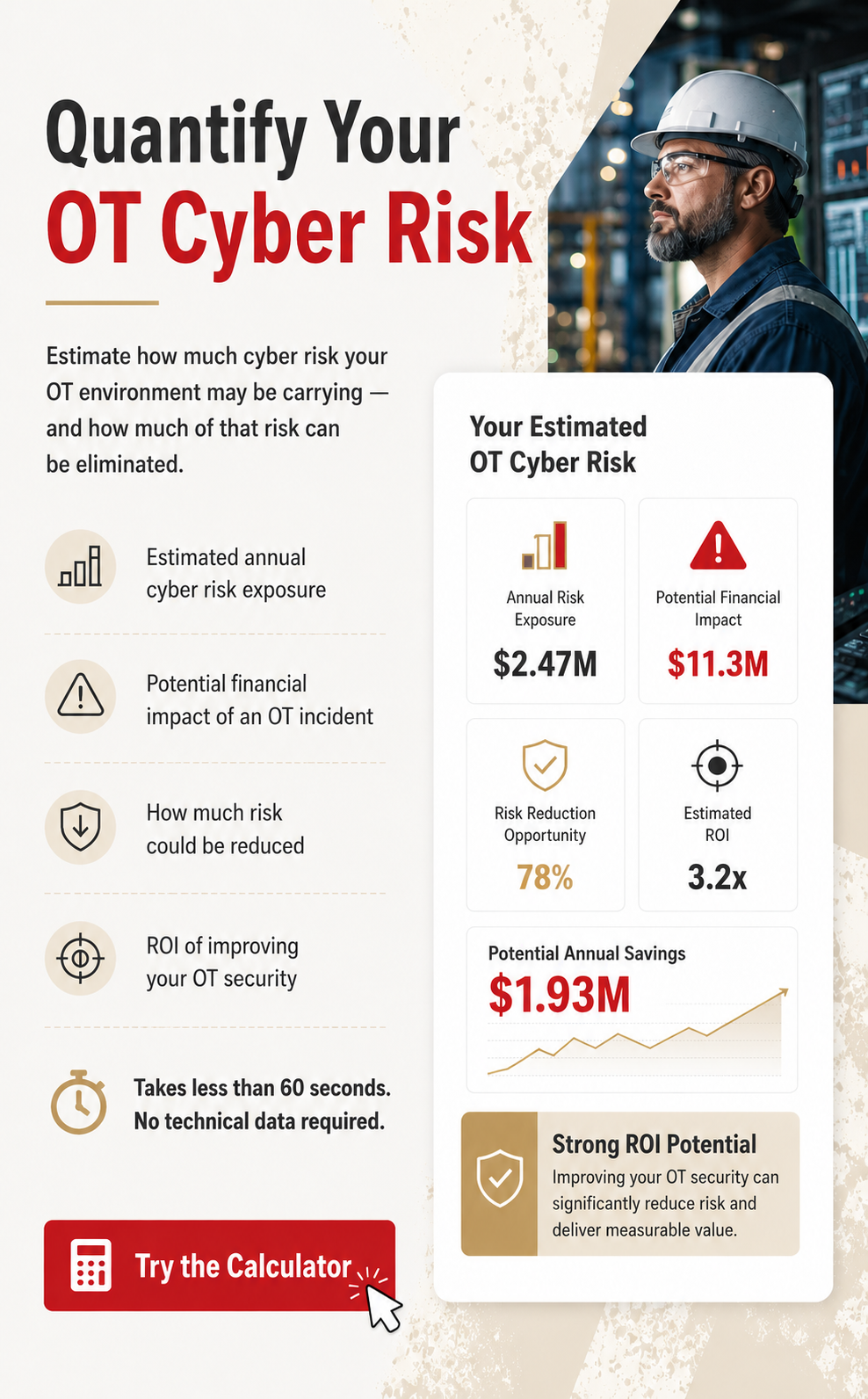






Explore the complete analysis of 23 OT attacks that defeated firewalls, VPNs, and air gaps.
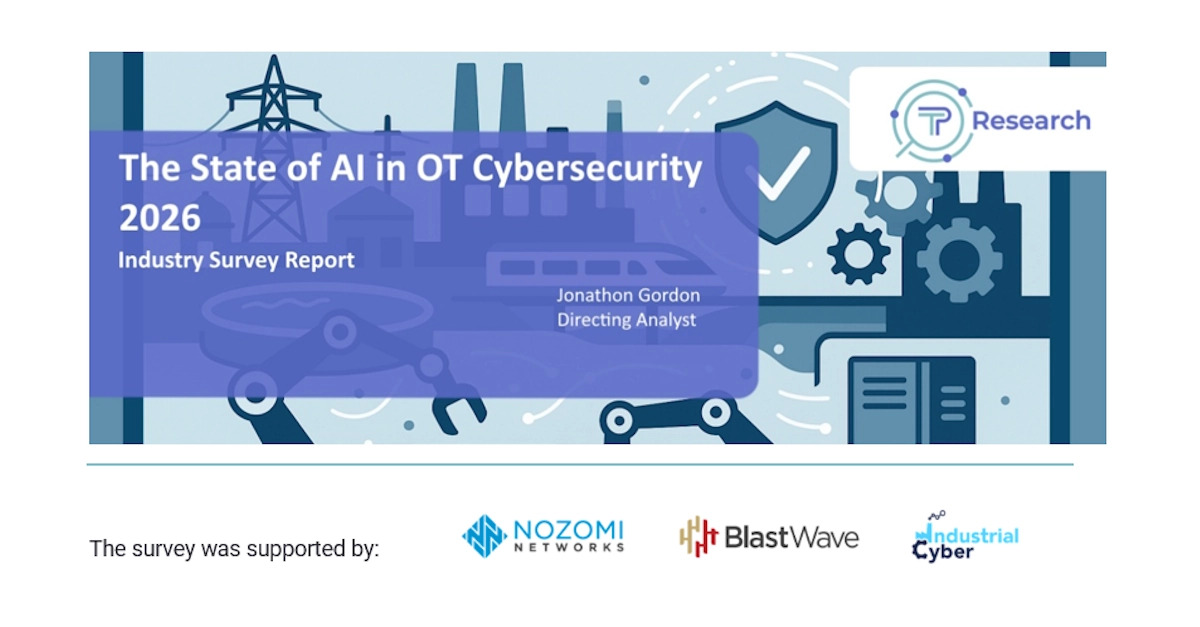
Less than 8% of OT and ICS Companies Have Robust AI Deployment, According to new Nozomi Networks and BlastWave-Sponsored Takepoint Research

.svg)
.svg)