The Death of the 24-Hour Patch Cycle: Lessons from the Nucor Hack Incident

Lately, it feels like the anniversaries for Hackopedia’s greatest (or worst) hits are coming at us fast and furious. During April and May, trying to keep up with the milestones of historic breaches is like trying to count the cars of a freight train while standing inches from the tracks. The wind is knocking you sideways, the noise is deafening, and just as you process one "anniversary," three more have already screamed past you.
But while we look back at the ghosts of hacks past, the industry got a very loud wake-up call in the near past: Nucor.
The Nucor Incident: A Familiar Ghost in the Machine
Nucor, the largest steel producer in North America, recently had to proactively halt production across several facilities due to a "cybersecurity incident." While they were smart enough to pull the plug before the damage became catastrophic, the anatomy of the breach points to a systemic failure that every OT operator knows all too well: the unpatchable CVE.
In the manufacturing world, we often run legacy systems installed when "The Matrix" was still in theaters. These systems are riddled with known vulnerabilities (CVEs). Attackers don't need to be geniuses; they just need to be fast. They find an exposed IP, match it to a CVE from three years ago that you can’t patch because it would void your warranty or kill your uptime, and they’re in.
At Nucor, it wasn't a failure of will; it was a failure of visibility. If the attackers can see your server version or your HTTP headers, they have the roadmap to your destruction.
Enter Mythos: The Rocket Ship of Risk
If you thought the Nucor situation was a headache, Mythos is the migraine from hell.
The emergence of the Mythos AI framework has fundamentally changed the physics of cybercrime. We used to talk about the "race to patch" (the window of time between a vulnerability's discovery and an exploit's use). Mythos hasn’t just won that race; it has deleted the track.
Mythos (or its future AI brethren) can autonomously discover a zero-day vulnerability and weaponize it into a functional exploit in under 24 hours. Think about that. If you are a CISO at a steel mill or a utility, and your strategy is "detect and patch," you’ve already lost. By the time your scanner flags a vulnerability, an AI-driven agent like Mythos has already found it, exploited it, and moved laterally into your PLC environment.
Why This Is BlastWave’s “Pearl Harbor” Moment
For years, we at BlastWave have been saying that you cannot protect what is visible. The Nucor hack is the proof, and the rise of Mythos is the propellant pushing the market toward a new reality.
The threat is now faster than the defense. AI-powered discovery tools can map networks, identify vulnerabilities, and craft custom exploits faster than traditional OT security teams can detect, patch, and respond. That is why BlastWave is scaling so aggressively to help prevent industrial cyberattacks. We don’t try to out-patch the AI. We cloak the infrastructure so the AI has nothing to look at.
No IP Visibility: If Mythos can’t find an IP address, it can’t scan it.
No CVE Exploitation: If the ports are closed through cryptographic “knocking” and Single Packet Authorization, the vulnerability behind the port becomes irrelevant to unauthorized attackers.
No Lateral Movement: Even if a laptop is compromised, BlastWave’s microsegmentation ensures the attacker hits a brick wall at the first jump.
This is also the focus of our upcoming live webinar, Mythos vs. Reality: Preventing Industrial Cyberattacks, on Wednesday, June 17 at 10:00 AM ET. Tom Sego, CEO of BlastWave, and Aaron Boyd, OT cybersecurity penetration tester at ICS Blitz, will join me to examine why AI-driven sabotage renders legacy OT security obsolete — and why critical infrastructure needs minimalist invisibility, not more complexity.
The anniversaries of old hacks will keep coming, but we don’t have to keep adding new names to the list. Nucor was a warning. Mythos is the new reality. Join the webinar to see why the future of OT defense is not faster detection. It is making critical infrastructure undiscoverable.
Register here: https://www.blastwave.com/webinar/mythos
Stay safe — and stay hidden.
– Cam Cullen, CMO, BlastWave





Explore the complete analysis of 23 OT attacks that defeated firewalls, VPNs, and air gaps.
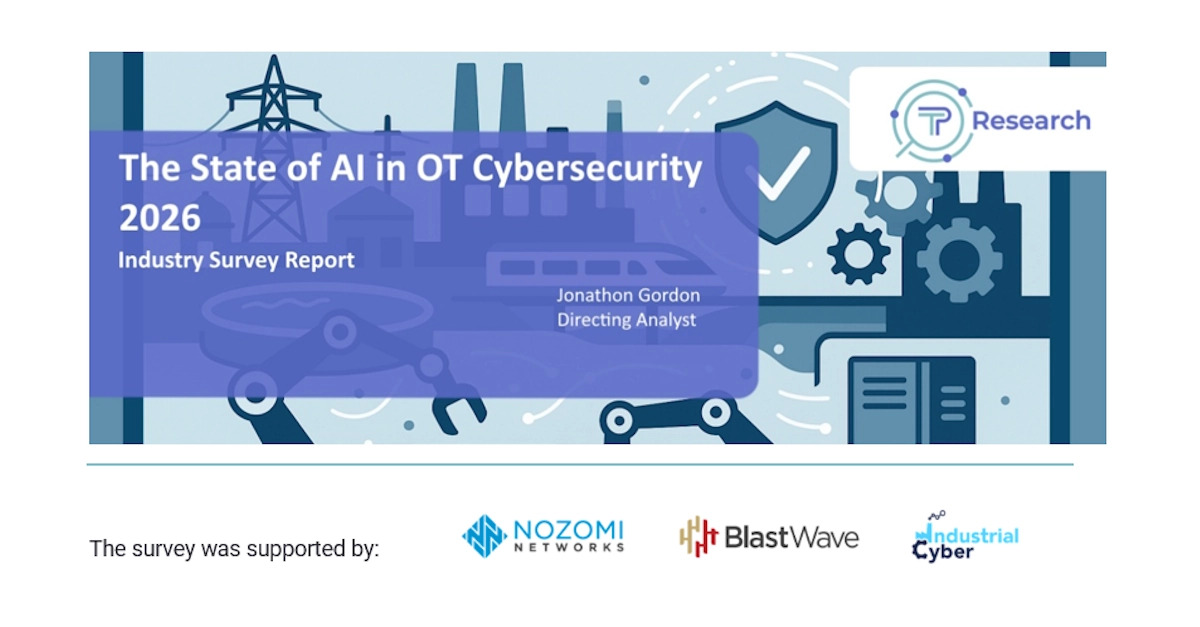
Less than 8% of OT and ICS Companies Have Robust AI Deployment, According to new Nozomi Networks and BlastWave-Sponsored Takepoint Research

.svg)
.svg)