
Why AI-Driven Sabotage Renders Legacy OT Security Obsolete — and the Case for Minimalist Invisibility
Webinar Replay: Mythos vs. Reality — Preventing Industrial Cyberattacks
Featuring Tom Sego, CEO of BlastWave • Aaron Boyd, OT Cybersecurity Penetration Tester, ICS Blitz • Moderated by Cam Cullen, CMO, BlastWave
If you are responsible for an operational technology (OT) network — a water authority, a manufacturing plant, an energy facility, a critical infrastructure operator — there is a specific message in this article that you need to hear before your next board meeting, before your next budget cycle, and arguably before you finish reading this sentence:
"In the era of Mythos, if you are defending, you are losing. It's time to become undiscoverable."
The window between a vulnerability being discovered and that vulnerability being weaponized has collapsed from 10 months to 9 hours. Your patching cycle hasn't changed. That gap is no longer a risk to be managed. It is a structural emergency.
This article is based on a live webinar held June 17, 2025, featuring Tom Sego, CEO of BlastWave, and Aaron Boyd, an OT cybersecurity penetration tester at ICS Blitz, moderated by Cam Cullen, CMO of BlastWave. Aaron has spent his career breaking into — and then helping secure — industrial control systems. What they discussed should be required reading for every asset owner, plant manager, and CISO in the industrial sector.
The webinar replay is on this page. But this article stands alone — because the urgency of what was discussed cannot wait for a convenient viewing window.
What Is Mythos — And Why Did the U.S. Government Pull It From the Market?
Mythos is an AI model developed by Anthropic, specifically engineered to find security vulnerabilities in code. Unlike conventional vulnerability scanners, Mythos doesn't simply flag known CVEs or obvious misconfigurations. It daisy-chains vulnerabilities — following complex, multi-step exploit paths through layered software stacks in ways no human security researcher could replicate at scale.
One documented exploit chain discovered by Mythos ran 30 vulnerabilities deep. Thirty cascading failures, each one enabling the next, opening a path that no single security audit would have caught.
Recognizing the dual-use danger of this capability, Anthropic did not release Mythos publicly. Instead, they launched Project Glasswing, a controlled access program that gave leading cybersecurity vendors — companies like Microsoft, Palo Alto Networks, and CrowdStrike — early access to Mythos so they could identify and patch vulnerabilities in their own products before adversaries developed comparable tools.
The results were immediate and significant. Within the Project Glasswing rollout, Mythos identified 1,500 findings in open-source projects alone — and only 97 had been patched. That is a 6% remediation rate. The patch Tuesday that followed Microsoft's access to Mythos was, by all accounts, unusually large.
And then, as Tom Sego described in the webinar, the U.S. government classified Mythos as an export control weapon and pulled it from availability — a recognition of just how powerful this capability is.
Let that sink in. A security research tool was treated by the federal government as a weapons system.
Now ask yourself: how long before adversaries — nation-states, organized criminal groups, and eventually less sophisticated actors who can simply ask an AI what to do — develop something comparable?
The answer, based on the trajectory of AI capability, is: not long. And when they do, your OT network needs to be invisible to them.
The OT Security Crisis That Already Existed Before Mythos
Here is the uncomfortable truth that Aaron Boyd opens with every client engagement: OT insecurity is not the result of negligence. It is the result of architectural inheritance.
Industrial control systems — PLCs, DCS platforms, RTUs, safety instrumented systems — were designed decades ago with primary engineering priorities being availability, determinism, and safety. Cybersecurity was not a realistic threat vector. Physical isolation was assumed. Only trusted engineers were expected to ever interface with these systems.
Authentication was minimal. Encryption was absent by design — you cannot introduce decryption latency into a real-time control signal. Logging was either sparse or nonexistent. And patching was simply not a thing, because taking an OT asset offline risks production downtime, safety incidents, and potential regulatory violations.
Over time, business requirements changed. Remote monitoring, vendor access, IT/OT convergence — all of these introduced connectivity into environments that were never architecturally designed to handle it. The result, as Aaron describes it, is a profound mismatch between how OT systems were built and the threat landscape they now face.
The Complexity Tax
A typical OT stack today might include real-time operating systems, embedded Linux distributions, proprietary application logic, open-source libraries, middleware, protocol converters, and remote management services. Many of these components are enabled by default — asset owners must actively turn them off if they don't use them, and many don't even know they're running.
This is what the webinar calls the Complexity Tax: the thousands of unnecessary code paths and open services accumulating in traditional industrial gateways and security appliances. Each additional layer introduces dependencies, configuration requirements, and potential failure modes. From a penetration testing perspective, vulnerabilities frequently exist not in the core control logic but in ancillary services — web interfaces, file transfer mechanisms, login components, third-party libraries included for convenience and never disabled.
Asset owners often have no complete picture of what software is running on their devices, let alone whether those components are actively maintained. As Aaron puts it: "You can't protect what you don't know. You can't defend what you can't see."
The numbers confirm the severity. Average remediation timelines in enterprise IT environments already exceed 200 days. In OT environments, with their operational constraints, the timelines are longer still. Tom Sego's term for patches that will realistically never be applied in OT: "never patches" — and Aaron confirmed the term with a laugh, citing Windows XP and Windows 7 systems still running in active OT deployments.
The Failure of the "God Box"
The webinar surfaces a critical architectural failure point that the broader security industry rarely acknowledges: the "God Box" problem. This is the practice of centralizing security into a single, feature-rich, multi-service appliance — a bloated OS running dozens of services simultaneously, positioned as the single guardian of the network.
The logic seems sound. One box, one pane of glass, everything managed centrally. But Mythos exposes why this is precisely the wrong architecture for the current threat environment. A multi-service OS is a high-value, high-complexity target for automated exploit tools. Every additional service running on that box is another attack surface. Every open port is another opportunity. And if that single system is protecting both OT and IT simultaneously, a successful compromise has catastrophic blast radius.
The answer is not a smarter God Box. The answer is structural minimalism: turn off every non-essential service, remove the OS-level bloat, and give AI-powered reconnaissance tools nothing to find.
The Complexity Tax in Practice
Aaron's testimony from the field is direct. When you conduct a typical OT audit and ask whether a site has remote access, corporate personnel will often say no — because policy doesn't allow it. But policy and reality are frequently different things. If you are not physically on-site validating your network, you cannot know for certain what connectivity exists.
"You'd be surprised how many reports I deliver and they're like, 'We had no idea this was possible,'" Aaron notes. "That's why you trust but verify."
This is the OT security environment into which Mythos — and AI-powered attacks more broadly — have now arrived.
AI Does Not Create the Weakness. It Demolishes the Buffer.
One of the most important distinctions Aaron draws is this: AI does not fundamentally alter the underlying vulnerabilities in OT environments. What it does is destroy the two defenses that OT operators have historically relied upon without realizing it: obscurity and time.
Obscurity meant that attacking OT required deep protocol knowledge, specialized tooling, and domain expertise that was genuinely rare. The limited documentation, the proprietary interfaces, the specialized training requirements — all of these functioned as a friction layer that kept the barrier to meaningful OT exploitation high.
Time meant that even when vulnerabilities were known, there was a meaningful window — historically around 10 months — between discovery and a functional exploit being deployed at scale. That window allowed organizations to assess, plan, test, and patch.
AI eliminates both.
With AI-assisted tooling, the specialized knowledge required to understand OT protocols, reverse-engineer firmware, and navigate proprietary systems is no longer a meaningful barrier. As Aaron puts it: "AI lowers the barrier to entry and increases the scale at which attacks can be conducted." A report by the UK's National Computer Security Centre documented this dynamic — AI helps nation-state actors and experienced hackers somewhat, but it helps less sophisticated actors dramatically. The script kiddie of five years ago can now simply ask an AI what to do next.
And on the time dimension: AI has compressed the vulnerability-to-exploit timeline from 10 months to 9 hours. This is documented, measured data — not a projection.
Reaction is no longer a viable security strategy. By the time you know about the vulnerability, the exploit window may already be closing.
Meanwhile, the defensive response timeline has not changed. Average patch deployment still runs around 60 days in enterprise environments. In OT it runs longer. The asymmetry is structural, and it is only widening.
The Time Asymmetry Problem — And Why Defensive AI Cannot Close the Gap in OT
The cybersecurity industry's current answer to AI-powered attacks is more AI on the defensive side — faster detection, automated response, "AI vs. AI." In IT environments, this logic has some merit. A compromised endpoint can be quarantined. A suspicious process can be terminated. A network segment can be isolated. These actions carry costs, but those costs are recoverable.
In OT environments, automated responses carry a categorically different risk profile. Quarantining an OT asset can halt production. Isolating a network segment can interrupt safety systems. Taking a device offline without understanding the full chain of operational dependencies can create the very incident you were trying to prevent. As Tom Sego describes it, OT asset owners get a
As Tom Sego describes it, OT asset owners get a "deer in the headlights" look when automated defensive responses are proposed — because they know that an automated action against the wrong target could trigger a safety incident with second and third-order consequences that are worse than the attack itself.
This means the AI-speed attack surface cannot be met with AI-speed defensive automation in OT. Attackers move at machine speed. Defenders must move at human-reviewed, risk-assessed, change-controlled speed. That asymmetry is not a gap to be closed with better tooling. It is a structural feature of OT environments.
The only viable response is not to fight the attacker within the attack surface. It is to eliminate the attack surface entirely.
The Mythos Chain of Pain: Why Patch-Dependent Security Strategies Are Failing
Even if patching were fast — and it isn't — Mythos-class vulnerability discovery creates a problem that patching alone cannot solve.
Consider a single vulnerability in an open-source protocol library. Four different vendors in your OT environment may use that library. To remediate, all four must patch. But vendor A cannot patch until vendor B patches, because they share a communication protocol. And one vendor may have four separate products deployed in your environment, all using the same protocol stack — meaning they must all be upgraded simultaneously in what Tom calls a "flash upgrade", because upgrading one while others remain unpatched breaks the communication chain.
A flash upgrade in OT requires taking down your entire infrastructure simultaneously. It requires extensive pre-testing. It requires coordination across multiple vendors. And it may require regulatory sign-off as well.
This is the Mythos chain of pain. It is not a hypothetical. It is the operational reality every asset owner faces when a deep vulnerability chain is discovered in their environment.
When Mythos-class tools reach adversaries, they will identify these chains faster than you can remediate them. The question is not whether you will face a Mythos-class vulnerability chain. The question is whether your network will be visible to the tools that find them.
Download the Free eBook: Mythos vs. Reality
Go deeper on the Mythos threat, the OT vulnerability crisis, and what a first-principles defense architecture looks like. BlastWave's eBook covers the technical and strategic dimensions that every industrial security decision-maker needs to understand right now. Download the Mythos vs. Reality eBook here →
The Three Defenses That Would Have Stopped Every Attack in BlastWave's Hackopedia
BlastWave maintains a resource called the Hackopedia — an analysis of 23 of the most significant and well-documented OT cyberattacks in recent history. The finding that stands out is not complicated:
Fewer than two of the 23 attacks involved sophisticated zero-day exploits. The vast majority succeeded through one of three failure modes: exposed systems with known CVEs, stolen or default credentials, or lateral movement through flat, unsegmented networks.
If three specific controls had been in place across all 23 networks, none of the attacks would have succeeded.
Control 1: Network Cloaking — From Visible to Vanished
If an attacker cannot find your network, they cannot attack it. This is the difference between a firewall and a cloaking device. A firewall is a shield — it sits in front of a visible, known target and attempts to block every attack, indefinitely. A cloaked network does not appear as a target at all.
The mechanism behind this is cryptographic "knocking" — a technique that ensures your ports don't even exist to any scanner, human or AI-powered, until an authorized cryptographic credential has been presented. Unauthenticated reconnaissance tools return nothing, because there is nothing to return. The network is not filtered. It is absent.
Aaron Boyd describes the impact of network cloaking from direct personal experience. He was engaged for a before-and-after penetration test at a client site — standard work: identify vulnerabilities, deliver the report, return a few months later to retest after remediation. When he came back, something had fundamentally changed.
"I genuinely have never banged my head on a desk as hard as I did. I had no idea what I was looking at on the network. I couldn't reach anything to actually compromise it. I would have had to chain at least 11 things together."
The client had deployed BlastShield. Adversaries — unlike penetration testers given unlimited time — move on to softer targets when faced with that level of complexity.
As Tom Sego frames it: the Enterprise has shields. The Klingons have a cloaking device. You can hit shields time and time again until you find a hole. You cannot hit what you cannot see.
Control 2: Micro-Segmentation — Shrinking the Blast Radius
Even where an attacker gains initial access — through a phishing campaign, a compromised credential, or a supply chain vector — micro-segmentation limits what they can do with it. Lateral movement, the technique that turns a single compromised endpoint into a network-wide incident, requires traversal between devices. Micro-segmentation restricts what each device can reach, and what can reach it.
In OT environments, where east-west traffic between PLCs, HMIs, and SCADA systems often travels on flat networks with minimal access controls, micro-segmentation is one of the highest-leverage defensive investments available. It also directly addresses supply chain attacks — a compromised vendor component that enters the network finds itself isolated, unable to propagate.
Control 3: Passwordless MFA — Removing the Credential as an Attack Surface
Between 80 and 90% of cyberattacks involve some form of credential theft or harvesting. Phishing, credential stuffing, default password exploitation — all are accelerated dramatically by AI, which can now generate convincing, socially engineered phishing content at industrial scale. The broken English of phishing emails from five years ago is gone. AI writes better phishing than most humans do.
Passwordless MFA eliminates the credential as an attack surface. There is no password to steal. Authentication is cryptographic, tied to a physical device or biometric factor, and cannot be harvested through any phishing campaign.
Critically, BlastShield delivers passwordless MFA to devices that cannot run agents — PLCs, HMIs, RTUs, SCADA systems, DCS platforms, safety instrumented systems. Every device in the OT environment gets cryptographic authentication, not just the ones capable of supporting endpoint software.
Introducing BlastShield: Structural Resilience Over Reactive Complexity
BlastWave built BlastShield from first principles for the OT security environment. Not adapted from an IT product. Not retrofitted to accommodate OT constraints. Built from the ground up on the principle that in OT, the answer to AI-powered speed isn't a faster alert — it's a smaller attack surface.
The BlastShield architecture is deliberately minimalist. A "Secure by Design" approach that turns off all non-essential services and removes the OS-level complexity that Mythos-class tools exploit. Where the God Box centralizes risk, BlastShield distributes and eliminates it.
BlastShield delivers all four critical capabilities in a single, integrated deployment:
- Network Cloaking — cryptographic knocking that makes your infrastructure invisible and non-discoverable to unauthenticated users and automated scanning tools
- Micro-Segmentation — software-defined segmentation that limits lateral movement and reduces blast radius, deployable without the complexity and cost of VLAN-based firewall architectures
- Passwordless MFA — cryptographic authentication delivered to every OT device, including agentless PLCs, HMIs, RTUs, and safety instrumented systems
- Secure Remote Access — session-recorded, encrypted remote access that replaces insecure tools like TeamViewer and VNC, with built-in remote desktop performance that is over 2.2 times faster than competing solutions
The Deployment Advantage
BlastShield deploys approximately 20 times faster than a traditional industrial firewall solution. It costs approximately one-quarter as much and requires approximately half the ongoing administrative overhead. Combined, that is approximately 160 times the operational advantage versus a firewall-based approach — in a real-world, measurable sense, not a marketing one.
The software appliance runs on a VM, commodity x86 hardware, or in containers and Kubernetes clusters. It sits upstream of industrial switches and imposes Layer 2 isolation downstream on any managed switch infrastructure.
A Track Record That Speaks for Itself
BlastShield has been deployed across 5,000 locations in 21 countries, accumulating over half a billion device hours of protection. In that history, there has been not a single successful breach.
That track record includes NSA red team exercises, U.S. Army purple team engagements, and independent penetration testers — including Aaron Boyd of ICS Blitz, who reached out to BlastWave after encountering a BlastShield-protected network he could not penetrate, and needed to understand what he was looking at.
BlastWave does not claim BlastShield is unhackable — nothing is. What the data shows is that adversaries encountering a BlastShield-protected network face a cost-of-attack high enough that they move on to softer targets. In a world where AI has made soft targets infinitely easier to find, that calculus matters enormously.
The Mythos vs. Reality eBook: Required Reading for Industrial Security Leaders
The webinar this article is based on was produced alongside a companion eBook that goes deeper into the Mythos threat model, the industrialization of vulnerability discovery, and the architectural decisions that determine whether your OT network survives the coming wave of AI-accelerated attacks. It is free. It is detailed. And if you are responsible for an OT environment, it may be the most important document you read this year. Download it here →
The Cost of Getting This Wrong
The financial comparison between OT breaches and IT breaches is not widely understood outside the sector — and it should be.
IBM's Cost of a Data Breach report puts the average IT breach at approximately $4.4 million. That is a serious number. It is not the number that applies to OT.
When Jaguar Land Rover suffered an OT-targeted cyberattack last September, the company did not manufacture a single vehicle. The estimated cost: $2.5 billion — roughly 570 times the average IT breach cost.
The NotPetya attack, which disrupted OT operations across 76 ports worldwide, carried an estimated total cost of $10 billion.
OT environments are simultaneously easier to attack than modern IT infrastructure — because of legacy architecture, patching constraints, and the absence of endpoint security tooling — and dramatically more expensive when breached, because production loss, safety incidents, and regulatory consequences compound the damage in ways a data breach does not.
Ransomware targeting OT has nearly doubled year-over-year, according to Dragos's 9th Annual OT/ICS Cybersecurity Report. The adversaries know the math. The question is whether the defenders do.
The First-Principles Answer to a First-Principles Problem
In second grade, you learned that if X equals zero, 100X is also zero. The first-principles logic of OT security in the age of AI is exactly this.
If AI can automate reconnaissance 100 times faster — but your network is invisible to reconnaissance — the AI advantage equals zero. If AI can generate credential-harvesting campaigns at industrial scale — but there are no passwords to harvest — the AI advantage equals zero. If AI can identify lateral movement paths across flat networks — but your network is micro-segmented — the AI advantage equals zero.
The answer is not to outrun the AI. The answer is to remove the target.
BlastWave's team is ready to walk you through exactly what that looks like for your specific OT environment. No sales script. A direct, technical conversation about your network architecture and what it would take to make your infrastructure invisible, segmented, and credential-hardened against the threat environment that now exists.
Schedule Your BlastShield Demo →
Your OT network is not going to patch its way out of the Mythos era. But it can become invisible to the tools that are coming. That conversation starts here.
The threat is not coming. It is here.
Every day your OT network is visible, your credentials are stealable, and your network is flat, you are operating in the attack surface that AI-powered adversaries are actively scanning. The Mythos era has begun. The only question is whether your network will be found.
1. What is the main message of this article?
The main message is that traditional OT security strategies are no longer enough in the age of AI-powered attacks. As AI accelerates vulnerability discovery, reconnaissance, credential abuse, and exploit chaining, OT networks need to reduce their attack surface before attackers can find a way in.
2. Why does AI change the threat landscape for OT security?
AI changes the threat landscape because it lowers the skill required to discover and exploit vulnerabilities at scale. The article explains that AI does not necessarily create new OT weaknesses; it removes the time and obscurity that OT defenders historically relied on.
3. What is Mythos, and why does it matter for industrial cybersecurity?
Mythos is described in the article as an AI model built to identify software vulnerabilities and chain them together across complex software stacks. It matters for industrial cybersecurity because OT environments often depend on legacy systems, layered software, and slow patching cycles, making them especially vulnerable to AI-assisted exploit discovery.
4. Why is patching not enough for OT environments?
Patching is difficult in OT because industrial systems often require continuous uptime, strict safety validation, vendor coordination, and regulatory controls. The article explains that some OT systems still run legacy platforms where patches may be unavailable, impractical, or operationally risky to apply.
5. What does “the Complexity Tax” mean in OT security?
The Complexity Tax refers to the accumulated risk created by unnecessary services, open ports, software layers, third-party libraries, and hidden dependencies inside OT environments. Each extra component increases the number of possible attack paths that AI-powered tools can discover and exploit.
6. What is the “God Box” problem?
The “God Box” problem is the risk of depending on one large, complex, multi-service security appliance to protect the network. The article argues that this creates a high-value target with too many services, too many open paths, and too much potential blast radius if compromised.
7. How does network cloaking help prevent AI-powered reconnaissance?
Network cloaking helps by making OT systems non-discoverable to unauthorized users, scanners, and automated tools. Instead of presenting a visible target that attackers can probe, a cloaked network gives unauthenticated reconnaissance tools nothing useful to find.
8. Why is micro-segmentation important for flat OT networks?
Micro-segmentation limits lateral movement inside OT networks. In a flat network, one compromised device can potentially lead to wider compromise. With micro-segmentation, each system has tighter access boundaries, reducing the blast radius of an attack.
9. Why does passwordless MFA matter for OT secure remote access?
Passwordless MFA matters because many attacks involve stolen, default, or phished credentials. By removing passwords from the access model, OT teams reduce one of the most common attack surfaces while still enabling secure remote maintenance access to critical systems.
10. What does BlastShield do for OT security?
BlastShield is presented as BlastWave’s OT security platform that combines network cloaking, micro-segmentation, passwordless MFA, and secure remote access. The article positions it as a way to reduce the attack surface rather than relying only on detection, patching, or reactive defense.
How to Reduce Your OT Attack Surface Before AI-Powered Attackers Find It
AI-powered attackers can discover vulnerabilities, chain exploits, and automate reconnaissance faster than traditional OT patching cycles can keep up. Here’s how industrial organizations can start reducing their exposed attack surface before attackers find a way in.
Step 1: Identify What Is Visible on Your OT Network
Start by reviewing which PLCs, HMIs, RTUs, engineering workstations, remote access paths, vendor connections, and management services are discoverable inside or outside the network. If attackers or scanners can see it, they can probe it.
Step 2: Eliminate Unnecessary Exposure
Disable unused services, close unnecessary ports, remove outdated access paths, and reduce anything that does not directly support safe operations. The goal is to reduce the complexity attackers can exploit.
Step 3: Cloak Critical OT Assets
Use network cloaking to make critical OT systems invisible to unauthorized users, scanners, and automated reconnaissance tools. A cloaked network gives attackers nothing useful to discover until access is explicitly authorized.
Step 4: Replace Password-Based Remote Access
Move away from passwords, shared credentials, and VPN-style broad network access. Use phishing-resistant authentication and identity-based access controls for secure remote maintenance access to OT networks.
Step 5: Segment Flat OT Networks
Break up flat networks with micro-segmentation or software-defined segmentation. Limit each user, device, or vendor to only the assets they are approved to access.
Step 6: Protect Legacy OT Devices Without Modifying Them
Many OT assets cannot be patched, upgraded, or interrupted safely. Protect legacy OT devices by placing secure access controls and cloaking around them instead of depending on direct changes to fragile systems.
Step 7: Reduce Lateral Movement
Assume that one credential, endpoint, or vendor path may eventually be compromised. Design access so one compromise cannot become a plant-wide or infrastructure-wide incident.
Step 8: Validate the New Attack Surface
After cloaking, segmentation, and access controls are deployed, retest the environment. Confirm that unauthorized users and scanners cannot discover critical assets or move laterally through the OT network.

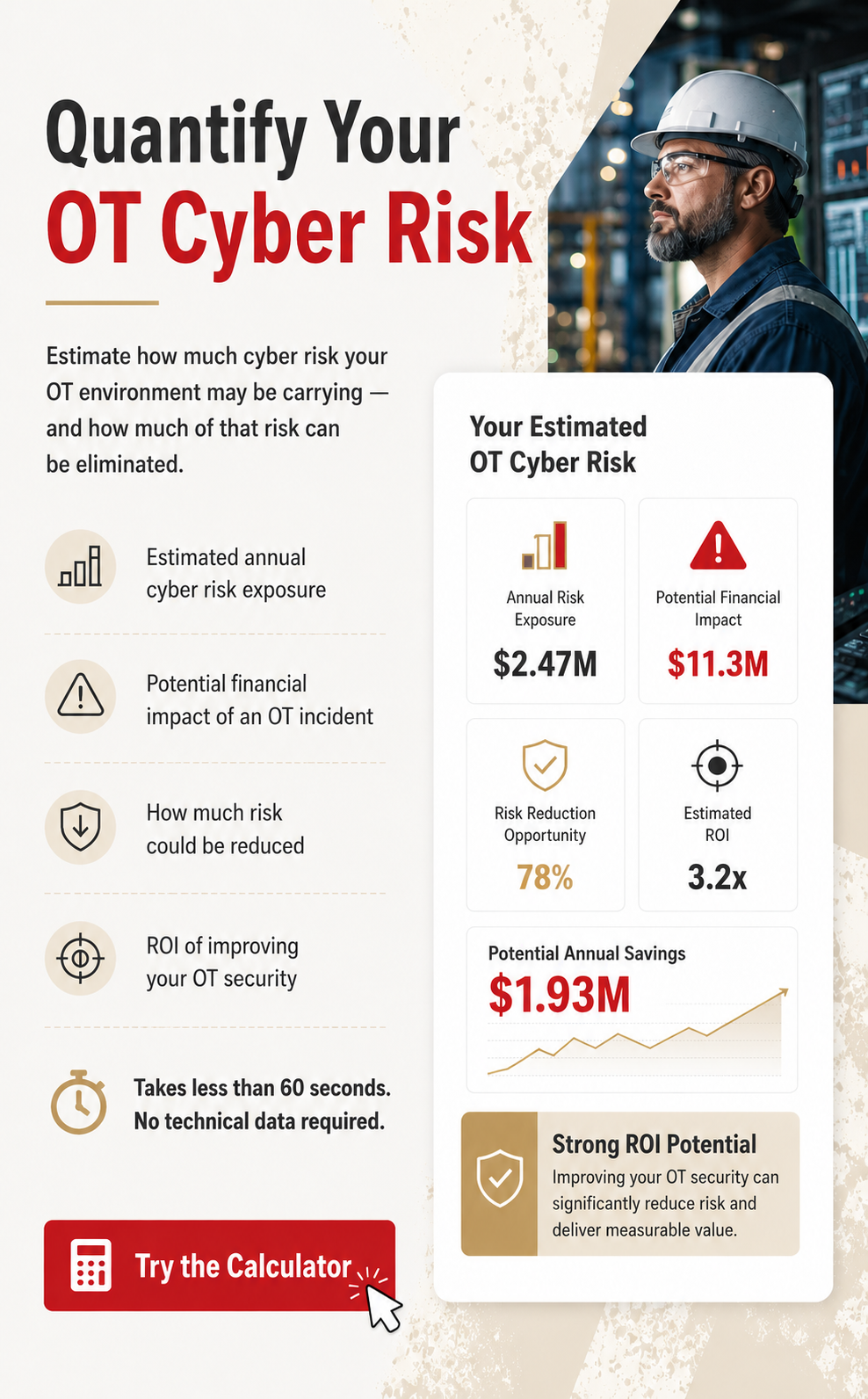






Jaguar Land Rover’s cyberattack shut production for five weeks. The lesson: limit blast radius with network cloaking, segmentation, and verified access to OT.
Explore the complete analysis of 23 OT attacks that defeated firewalls, VPNs, and air gaps.
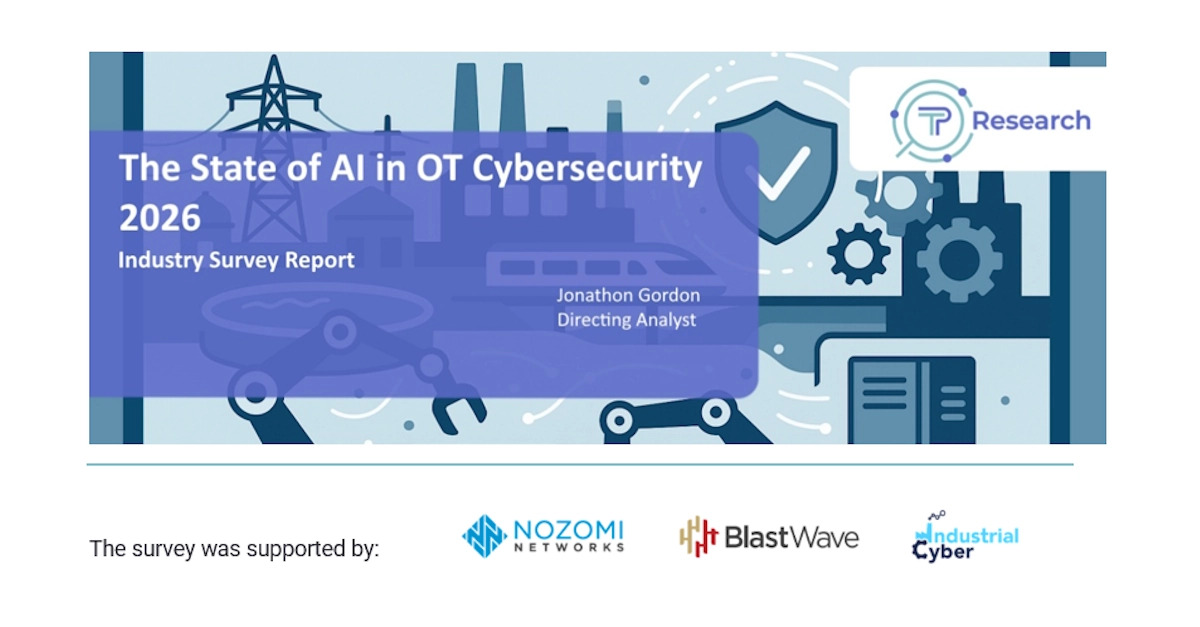
Less than 8% of OT and ICS Companies Have Robust AI Deployment, According to new Nozomi Networks and BlastWave-Sponsored Takepoint Research

.svg)
.svg)